
WANDER VIETNAM · SPECIAL EXPEDITION
Fact-checked November 10, 2026. Independent, desk-researched guide; not a first-hand expedition review.
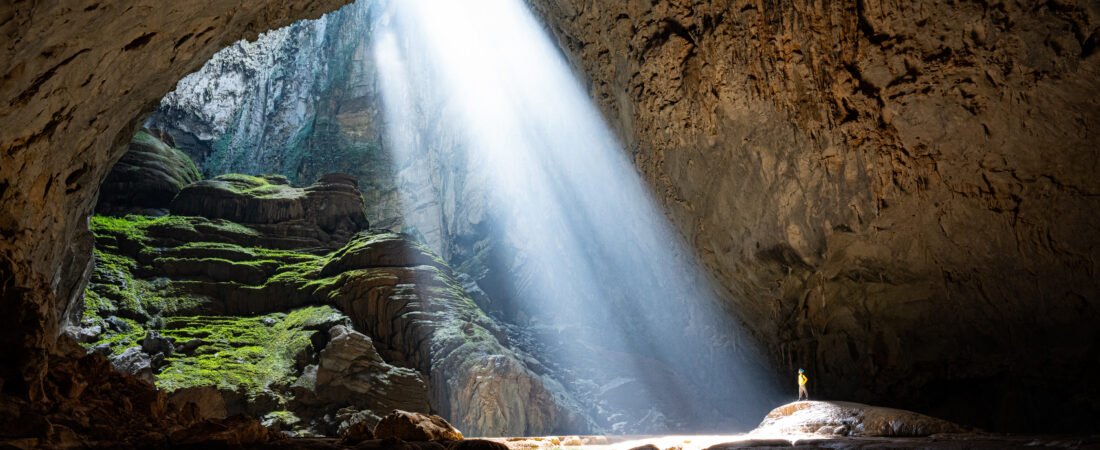
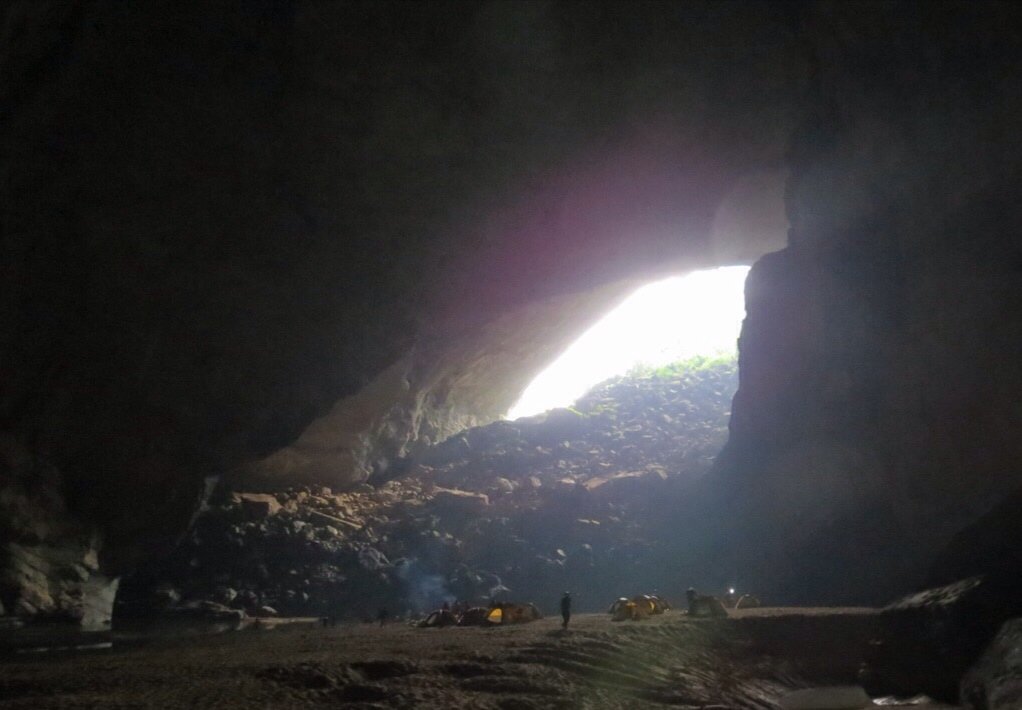
Imagine standing in a cave so vast that people ahead become tiny specks of colour. Sunlight falls through a break in the limestone roof, mist drifts through immense passages and trees grow far beneath the forest. This is Son Doong Cave, widely recognized as the world’s largest known cave passage.
Unlike an ordinary tourist attraction, Son Doong demands preparation, fitness, significant funds and an approved place on a guided expedition. The reward is extraordinary, but the practical conditions matter just as much as the view.
| Location | Phong Nha–Ke Bang, Quang Tri Province (formerly Quang Binh) |
|---|---|
| Duration | 6 days / 5 nights |
| Published price | VND 80,000,000 / US$3,000 |
| Difficulty | Challenging; approved participants only |
| Age | 18–70 |
| Season | January–August |
| Capacity | Up to 10 paying guests |
1. Where Is Son Doong?
Son Doong lies within Phong Nha–Ke Bang National Park in central Vietnam’s Quang Tri Province, formerly part of Quang Binh before the 2025 merger. The surrounding UNESCO-listed landscape protects limestone mountains, rainforest and an extraordinary network of caves. The practical transport hub is Dong Hoi (airport and railway station); travellers reach Phong Nha for the expedition briefing. There is no public ticket counter or independent route into Son Doong.
Explore our Phong Nha and Quang Binh travel guide for the broader region. For more regional inspiration visit Wander Vietnam, and for transport planning use How to Get Around Vietnam.


2. Discovery of an Underground World
Local forest explorer Ho Khanh found the entrance around 1990. A British–Vietnamese team surveyed the colossal passage in 2009, bringing it to global attention. Controlled expeditions opened in 2013. The cave is remarkable not only for its size but also for underground rivers, roof collapses admitting daylight, exceptional stalagmites and vegetation.

3. What Is Inside Son Doong?
Immense caverns
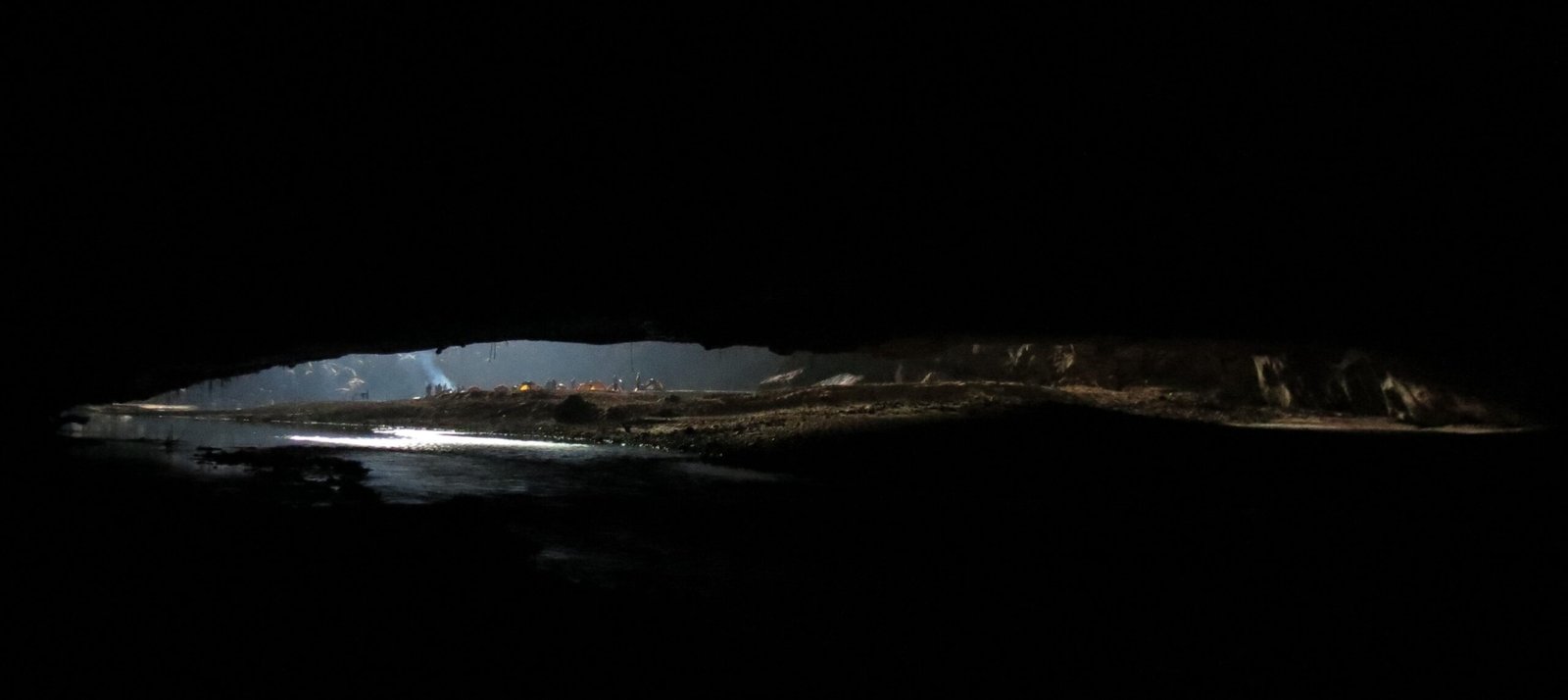
Some passages are so big that explorers give the only understandable sense of scale. Giant formations stand under distant ceilings and massive boulders become small elements in a much larger landscape.


Doline 1: Watch Out for Dinosaurs
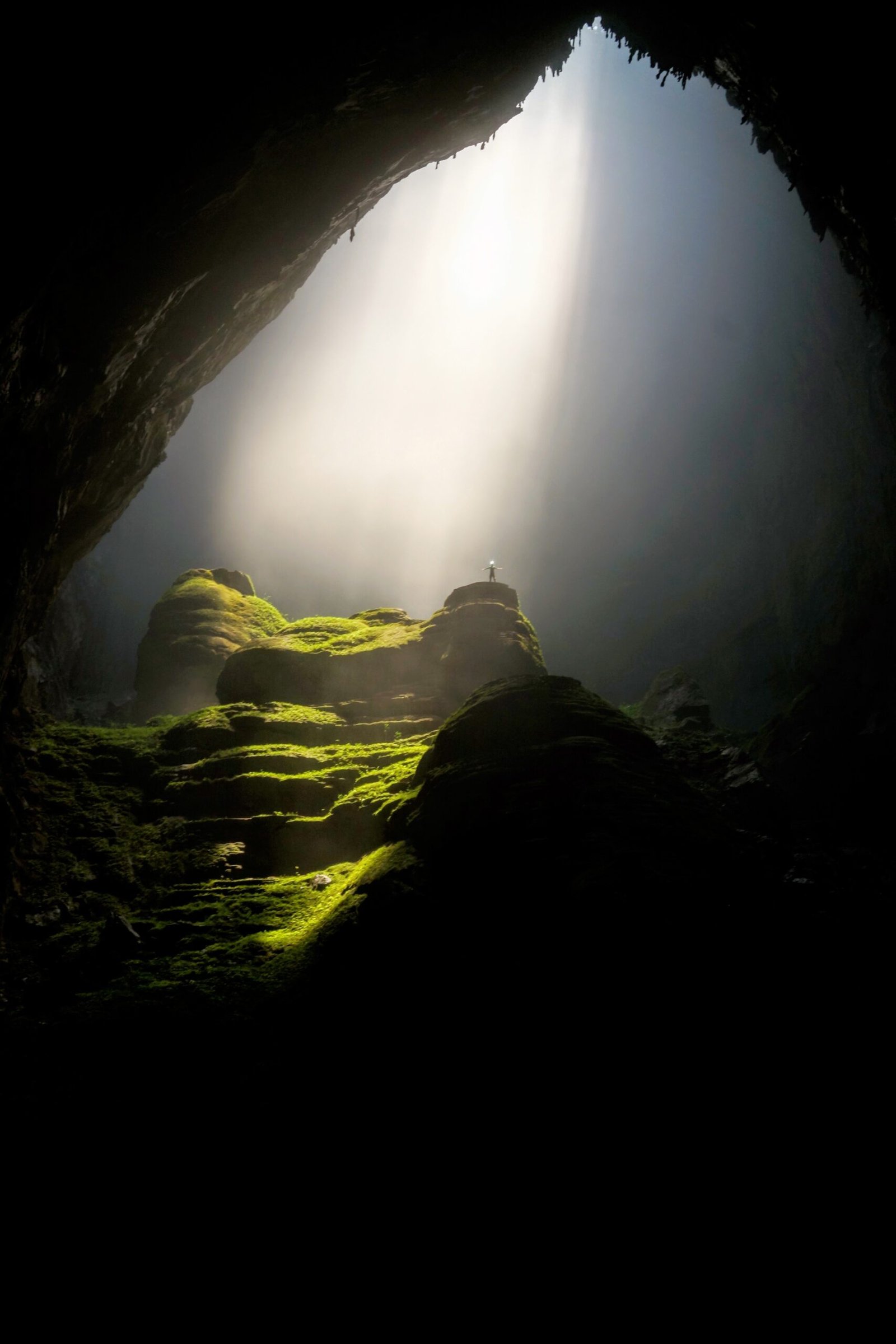
Where the ceiling has collapsed, beams of natural light enter the chamber under favourable weather and timing. Nearby is the layered Wedding Cake stalagmite. A dramatic sunbeam is never guaranteed, so photographs should inspire rather than promise specific conditions.

Doline 2: Garden of Edam
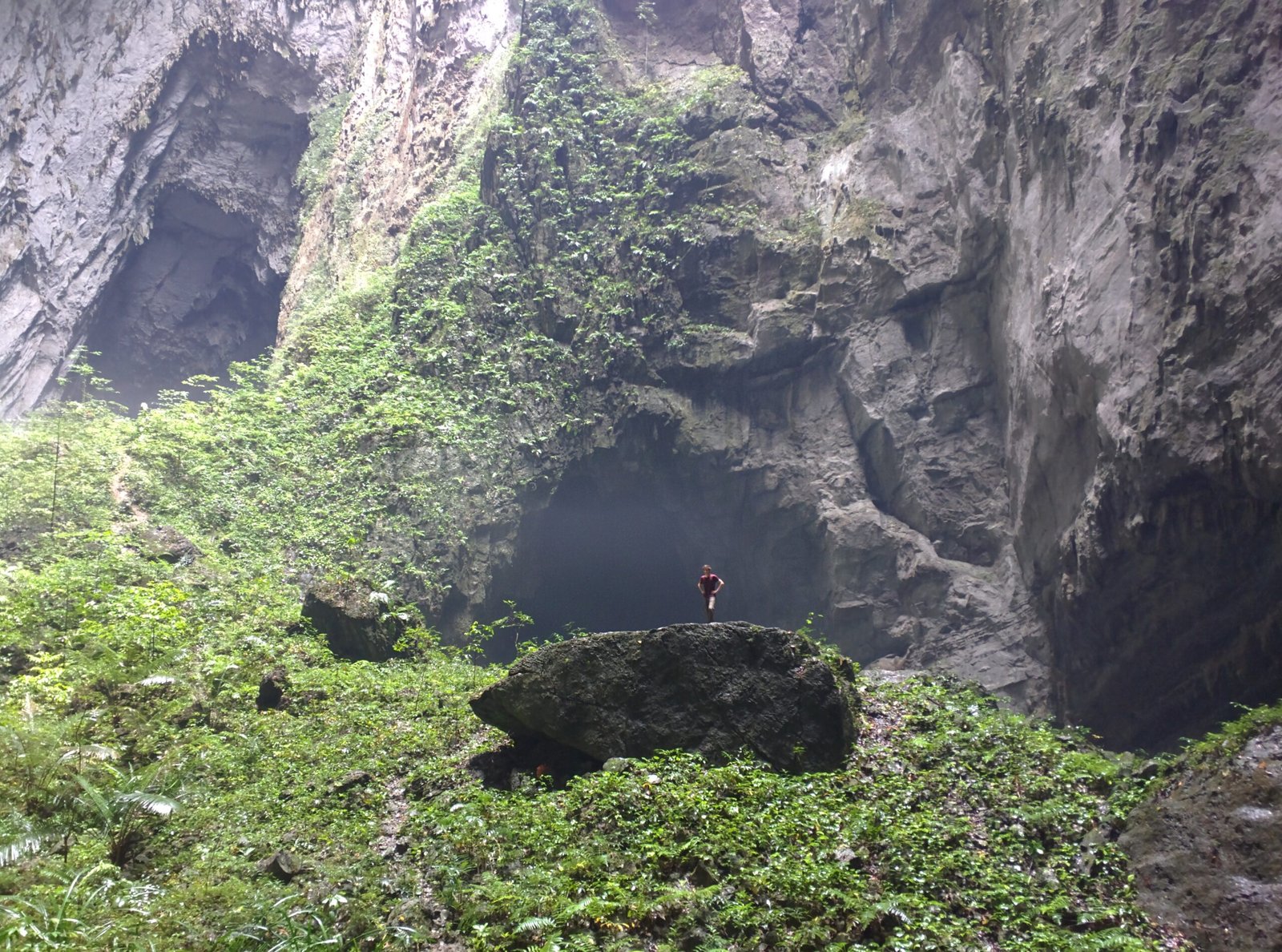
Another huge roof opening supports a thriving underground forest. Trees and ferns rise inside the cave, surrounded by limestone walls and shifting mist. The result is a living habitat rather than simply a rock formation.


Underground waterways
Rivers have carved these passages over immense geological periods. Today’s travellers encounter streams, wet rocks and specialized cave environments. Visitors must follow the guide’s conservation instructions.

The Great Wall of Vietnam
Near the exit, the route tackles an imposing calcite barrier with professional safety systems. The operator describes a section using an approximately 18-metre ladder plus a 72-metre steep climb. This is demanding supervised terrain, not a casual walk.
4. What the Six-Day Expedition Involves
The package combines an arrival briefing, forest trekking, the Hang En approach, Son Doong exploration, wilderness camps and return logistics. Published route figures are roughly 28 km of jungle and mountain trekking, 9 km of cave exploration and 50 crossings of rivers or streams. Three nights are spent camping in wilderness settings, including two within Son Doong. Daily route details can change for safety and weather.
The support team provides meals, drinking water, specialist equipment and expedition camping arrangements. Designated before-and-after accommodation is included in the currently published package. Notify the operator about dietary restrictions in advance.


Expedition Meals, Campsites & Daily Comfort
Sleeping and eating in Son Doong are part of the expedition experience, but the logistics are more comfortable and organised than many travellers imagine. The operator’s support team carries food, camping supplies and technical equipment into the forest and cave. These facilities are designed for recovery and safety, not conventional resort comfort.
What do you eat?
Oxalis provides breakfast, lunch and dinner during the trekking expedition. Its cooking team prepares meals using supplies carried along the route, with hot tea and coffee also available. Drinking water is treated with dedicated filtration and boiling processes. Vegetarian or special dietary needs and food allergies should be declared in the booking form well in advance.
Consider bringing personal snacks or electrolyte supplements only if the operator permits them. Do not rely on finding food stalls or shops along the route.
Where do you sleep?
The six-day itinerary includes two nights in designated local accommodation around the expedition and three wilderness camping nights. The first camp is near the cave entrance; the next two are inside Son Doong near Doline 1 and Doline 2, respectively. Oxalis provides specially designed single or double tents on raised platforms, with a mattress, pillow and sleeping bag. Tents use mesh ventilation, and the operator describes additional comfort measures depending on the camp setup.
Outside the cave, the current programme identifies Commander Lodge before the trek and Chay Lap Farmstay afterwards. Treat these as operator-arranged logistics: check the confirmed itinerary before booking any duplicate hotel nights.
What about toilets, washing and privacy?
Designated campsite sanitation includes compost toilets, toilet paper and hand-cleaning supplies. Washing facilities and usable water are limited and vary by camp. Oxalis describes treated water and facilities, but its FAQ specifically warns that water inside cave camps is prioritised for drinking and cooking, and recommends personal wet wipes. Expect a basic wilderness routine rather than a hot shower on demand; ask the operator for the exact facilities on your departure.
Who carries your belongings?
Porters carry an allocated personal bag up to 7 kg per guest between camps. Travellers still need their own 20–30 litre daypack for items required while trekking, including water and small personal necessities. Excess baggage and valuables can be stored according to Oxalis instructions. Bring dry bags for electronics and pack for damp conditions.
Practical evening expectations
After dinner, the group may share tea and listen to cave stories before resting. There is normally no personal mobile signal or Wi-Fi on the remote expedition route. Oxalis supplies emergency satellite communications; it does not provide regular guest internet access. Alcohol and intoxicants are prohibited on the trek.
Official references: Son Doong expedition facilities · Expedition FAQ · What to expect.
5. Who Can Join?
This is a Challenging expedition requiring strong physical conditioning, recent overnight trekking on rough mountain or forest terrain and accurate health declarations. Oxalis lists recent challenging treks of at least 8 km per day as a reference. Its fitness pages mention a 5 km run in 45 minutes and climbing five flights of stairs, although the exact wording of the criteria differs across pages. Neither indicator alone guarantees acceptance.
Expect steep gradients, rocky ground, wet crossings and consecutive days of exertion. The operator reviews all applicants and may decline participation. Anyone with a relevant medical concern or uncertain exercise tolerance should obtain individual medical advice first.
6. Eight-to-Twelve-Week Preparation Plan
| Weeks 1–2 | Build walking consistency, gentle cardio and leg strength |
|---|---|
| Weeks 3–4 | Add inclines, stairs and balance training |
| Weeks 5–6 | Longer uneven-terrain hikes and controlled descents |
| Weeks 7–8 | Build endurance with suitable daypack practice |
| Weeks 9–10 | If using 12 weeks, add progressive back-to-back hiking |
| Weeks 11–12 | Reduce training load, recover and confirm equipment |
For an eight-week plan, adapt weeks 1–7 and use week 8 for lighter activity and recovery. This example is not a substitute for relevant overnight trekking experience or medical clearance. Progress gradually and stop if symptoms develop.
7. Season and Weather
The regular expedition season is January to August; wet-season flooding makes the route unsuitable for regular departures later in the year. Cooler early-season days, warmer months, green vegetation and variable underground light offer different experiences. Securing a suitable confirmed departure is more practical than choosing an imagined perfect photography month.
8. How to Get a Place When Fully Booked
- Check the official Oxalis calendar.
- Ask directly about future seasonal releases, including 2029, without assuming opening dates.
- Ask if cancelled places ever become available and how the operator would notify qualified applicants. Do not presume a formal waiting list exists.
- Prepare your trekking and health history, complete the screening and wait for written confirmation. Avoid non-refundable flights or hotels before receiving it.
Where to Register & How to Get There
Son Doong expeditions must be booked online through Oxalis Adventure. Its Phong Nha office is the registration and safety-briefing contact point, not a walk-in ticket counter for the cave. Standard shared-tour bookings cannot be made by telephone or email.
Official Oxalis Office
Address: Phong Nha Sub-quarter, Phong Nha Commune, Quang Tri Province, Vietnam.
Hotline: +84 919 900 357
Office: +84 232 367 7678
Email: contact@oxalisadventure.com
Booking Checklist
- Select an available date using the official online form.
- Submit accurate medical, fitness and trekking details.
- Wait for the technical review and approval email (up to five working days).
- Pay only using the confirmed operator instructions and receive final booking confirmation.
Map marks the Phong Nha operator area, not the restricted Son Doong cave entrance. Confirm the exact briefing meeting point in your booking confirmation.
Open Oxalis on Google Maps
Directions from Dong Hoi Airport
Official Booking Guide
Arrival Route: Dong Hoi to Phong Nha
Important: The published arrival instruction requires participants to reach Dong Hoi by 3:00 pm on Day 1. Oxalis normally arranges the transfer to Phong Nha and the mandatory briefing around 5:30–6:00 pm. Check the time and transfer details in your own confirmation; arriving too late for the briefing can prevent participation.
Sources: Oxalis booking process · Official office details · Son Doong expedition itinerary. Information checked November 10, 2026.
9. Price and Cancellation Risk
The current advertised expedition price is VND 80,000,000 / US$3,000 per person. Oxalis publishes support staffing for ten guests of one cave expert, one guide, six safety assistants, two cooks and eighteen porters. Personal international travel and some personal equipment costs remain separate. Verify adequate insurance for adventure activity and emergency evacuation.
| Written cancellation notice | Published charge |
|---|---|
| More than 90 days | VND 7 million processing fee; balance refunded |
| 45–90 days | 50% fee, subject to the exact contractual day boundaries |
| Fewer than 45 days | No refund |
These simplified conditions were checked on November 10, 2026. Confirm precise contract wording, any exceptions and any available rescheduling or replacement rules before payment. The operator’s published wording about replacement participants is not fully consistent; do not assume transfers are permitted. Read the official terms.
10. Packing, Safety and Transport
Pack quick-drying clothing, long trousers, reliable grippy footwear, suitable layers, a compact daypack, waterproof protection for electronics and personal medicines. Oxalis provides specialist equipment such as helmets, harnesses, headlamps and camp gear. Follow the exact operator packing instructions.
Normal mobile coverage is generally unavailable on the remote route. Professional guides and specialist communication equipment reduce risk but cannot remove the hazards of flooding, climbing, slips and delayed emergency evacuation. Confirm arrival deadlines in Dong Hoi/Phong Nha, and allow recovery time after the trek.

11. Alternatives to Son Doong
| Experience | Duration | Level | Cost |
|---|---|---|---|
| Phong Nha Cave | Half day | Easy | Verify local ticket |
| Paradise Cave | Half day | Easy visitor route | Verify local ticket |
| Dark Cave | Half day | Active visitor experience | Verify package |
| Tu Lan Experience | 1 day | Easy expedition | VND 2 million |
| Hang En | 2 days / 1 night | Moderate | VND 9.5 million |
| Hang Va | 2 days / 1 night | Moderate, with technical sections | VND 9.4 million |
| Son Doong | 6 days / 5 nights | Challenging | VND 80 million |
Hang En appears along the wider Son Doong approach but is also offered as a separate shorter tour. These categories do not mean all activities are suitable for all travellers. Check each operator’s health restrictions, prices and current availability.
12. Protecting the Cave
Restricted visitor numbers and guided logistics help protect a delicate ecosystem. Stay on the authorized path, avoid touching cave formations, do not disturb wildlife and follow waste-management instructions. An image is never worth permanent damage.
Frequently Asked Questions
Can anyone visit Son Doong?
No. Physical, medical and trekking-experience screening applies.
Are 2027 and 2028 fully booked?
Oxalis reported both seasons fully booked on November 10, 2026. Recheck directly for updates.
Is booking for 2029 open?
This guide has not verified a release date. Contact Oxalis rather than assuming availability.
Can you enter independently?
No. Entry requires an authorized guided expedition.
Can Agoda or Klook sell cave access?
Use the authorized expedition booking route; other accommodation and experience listings do not constitute Son Doong entry.
Is the expedition completely safe?
No remote wilderness expedition can eliminate all risks. Screening and trained safety teams reduce them.
Final Thoughts
For prepared travellers, Son Doong offers something rare: a sense of scale, isolation and living geology almost impossible to reproduce in ordinary sightseeing. If the expedition is not suitable for you, the Phong Nha area still offers extraordinary accessible caves.
Some places are worth seeing. Others are worth preparing for. Son Doong belongs to the second category.
How We Researched This Guide
This is a desk-researched article, not a first-hand account. Sources include Oxalis’s official itinerary, eligibility and booking terms; UNESCO World Heritage material; and open-license photo source records. Geographic naming follows the 2025 Quang Binh–Quang Tri provincial merger. Always verify pricing, screening and booking terms before paying.
Affiliate Disclosure
RoamDecide offers independent travel advice. Some accommodation or equipment recommendations elsewhere on the site may contain affiliate links that earn a commission at no extra cost. No official association with Oxalis is implied.
Primary Sources
- Oxalis: Son Doong Expedition
- Oxalis: Booking Conditions
- Oxalis: Booking Process
- UNESCO: Phong Nha–Ke Bang
Photographers and Image Licenses
The images are licensed photos of Son Doong, not AI-generated illustrations. Photos were resized by the WordPress media workflow as applicable.
- Trần Tuấn Việt — A Beam Through the Darkness.jpg · CC BY-SA 4.0
- Doug Knuth — Son Doong Cave 1.jpg · CC BY-SA 2.0
- Doug Knuth — Son Doong Cave 4.jpg · CC BY-SA 2.0
- Doug Knuth — Son Doong Cave 5.jpg · CC BY-SA 2.0
- Dave Bunnell — Son Doong Cave DB (1).jpg · CC BY-SA 4.0
- Dave Bunnell — Son Doong Cave DB (2)-edited.jpg · CC BY-SA 4.0
- Dave Bunnell — Son Doong Cave DB (3).jpg · CC BY-SA 4.0
- Linhcandng — Son Doong Cave Doline with Scale.jpg · CC BY-SA 3.0
- Daniel Burka — Son Doong Cave by Daniel Burka.jpg · CC0 1.0
- Doug Knuth — Son Doong Cave 3.jpg · CC BY-SA 2.0

