
Wander Vietnam · RoamDecide
A practical decision guide to Vietnam’s cave country: where to base yourself, which cave fits your fitness, how many days to allow and what to do when rain closes the river routes.
Last verified: 9 November 2026 · Independent desk-researched decision guide
Is Quang Binh worth visiting?

Yes — if caves, rivers and limestone countryside are the point of your trip, and you can give it at least two nights. Quang Binh is the travel name for the area around Phong Nha–Ke Bang National Park, a UNESCO World Heritage site whose listing was extended in July 2025 to include Laos’s Hin Nam No National Park as a single transboundary property. The headline experience is underground; the reason to stay longer is the green, slow countryside around it.
| Quick decision | Answer |
|---|---|
| Location today | Quang Tri Province. The former Quang Binh Province merged into Quang Tri on 1 July 2025. |
| Best base for caves | Phong Nha Commune (the former Phong Nha township area) |
| Best base for beach, dining and transport | Dong Hoi (now Dong Hoi, Dong Thuan and Dong Son wards) |
| Suggested stay | 3 days / 2 nights; 4 days for caves plus coast at a relaxed pace |
| Best window | March–August; April–August is the local peak |
| Biggest risk | Heavy rain and high water from roughly September to December; storms can arrive from August |
| Important trade-off | The most famous experiences are weather-dependent, and Son Doong is booked out years ahead |
RoamDecide verdict: build a short trip around Quang Binh rather than squeezing it into a single day between Hue and Hanoi. Stay in Phong Nha, make one major cave the centre of each full day, and keep one flexible half-day for weather.
Where is Quang Binh now, and how do you get there?
What the 2025 merger changed for travellers
Since 1 July 2025, the former Quang Binh Province has been part of an enlarged Quang Tri Province, and district-level government was removed in the same reform. For travellers, three changes matter:
- Phong Nha — the former Phong Nha township was combined with Lam Trach, Xuan Trach and Phuc Trach communes to form Phong Nha Commune, Quang Tri Province.
- Dong Hoi — the former Dong Hoi City is now split into Dong Hoi, Dong Thuan and Dong Son wards. The former Quang Phu commune, home to the sand dunes, is part of Dong Thuan ward.
- Addresses — hotel listings, maps and older guides may still show “Bo Trach District” or “Dong Hoi City, Quang Binh Province”. Navigate to the exact property or attraction pin rather than searching by province.
We use Quang Binh in this guide because it remains the name most travellers search for.
Getting there
By air: Dong Hoi Airport (VDH) is the regional gateway. Check that a nonstop flight operates on your exact date — schedules vary by airline and season — and note your arrival time against hotel check-in and the onward transfer.
By train: Dong Hoi Station is on the north–south railway, which makes Quang Binh easy to combine with Hue or Da Nang. The train gets you to Dong Hoi, not to Phong Nha; arrange the last leg separately.
By bus or car: some long-distance buses stop in Phong Nha, but drop-off points vary by operator. Families with luggage, or anyone arriving after dark, will usually find a prebooked car simpler.
Dong Hoi to Phong Nha: roughly 45–50 km depending on where you stay; allow about an hour by road. For wider route planning, see How to Get Around Vietnam.
Decision tip: if caves are your priority, go straight to Phong Nha on arrival instead of booking your first night in Dong Hoi by default.
Who should visit, and who should skip?
Good reasons to go
- You want a UNESCO-listed karst landscape rather than a beach-only break
- You enjoy boat trips, cave walkways, countryside cycling and photography
- You can stay at least two nights and travel at a slower pace
- You want regional food outside a resort
Reasons to choose somewhere else
- Your dates fall in a period of active flood or storm warnings
- Someone in your group cannot manage steep steps, uneven ground or boat transfers
- You want nightlife, shopping and a large international dining scene
- You expect attractions within walking distance of your hotel
By traveller type
Families: choose comfortable accommodation and established visitor caves. Check walking and step counts before choosing Paradise Cave, and do not assume ziplines, cave swimming or technical treks suit children.
Couples: a countryside stay near Phong Nha is quieter than a city hotel. Pair one big sightseeing day with cycling and slow evenings.
Solo travellers: central Phong Nha is the easiest place to arrange tours and meet other travellers. Confirm exactly where an overnight bus drops you.
Adventure travellers: guided jungle and cave expeditions are the region’s specialty. Check fitness, swimming requirements, weather rules and evacuation arrangements with the operator before paying.
Beach-first travellers: stay in Dong Hoi, but treat swimming as weather-dependent. Calm-looking water is not a safety guarantee.
Which cave should you choose?

| If you want… | Choose | Effort | Main weather sensitivity |
|---|---|---|---|
| A classic, scenic first visit | Phong Nha Cave | Low–moderate | High (boat) |
| The most dramatic formations on a set route | Paradise Cave (Thien Duong) | Moderate — around 500 steps | Medium |
| An active day with water and mud | Dark Cave (Chay River–Hang Toi) | Moderate–high | High (water) |
| A once-in-a-lifetime expedition | Son Doong | Very high | Seasonal |
Phong Nha Cave: the river-and-cave classic
You travel by boat along the Son River before entering the cave, so the trip moves from village scenery to limestone hills to the underground river. Best for: first-time visitors and couples. Trade-off: it is the experience most exposed to high water — when the Son River rises, boat visits can be paused. Allow a full morning rather than treating it as a quick stop.
Paradise Cave (Thien Duong): the most dramatic set route
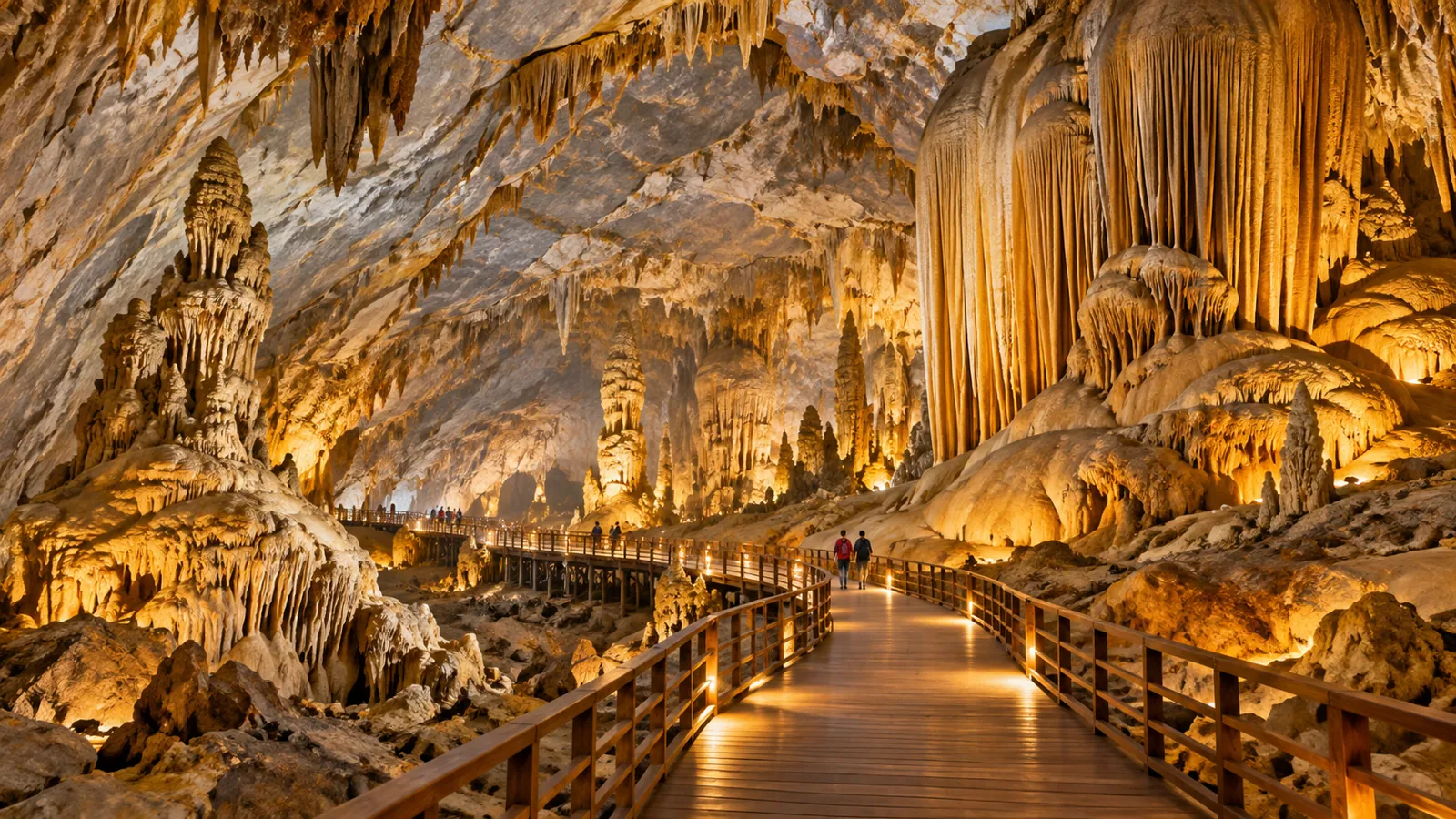
Paradise Cave is known for its huge chambers and dense formations, viewed from built walkways. An electric shuttle takes visitors from the entrance to the foot of the hill, but you then climb roughly 500 stone steps to the cave entrance, and the route inside is on foot. Best for: cave photography and visitors who want spectacle without an expedition. Trade-off: less suitable for anyone who cannot manage sustained stairs.
Dark Cave (Chay River–Hang Toi): the active option
This is an organised adventure site rather than a viewing cave: packages can include ziplining, kayaking, cave swimming and mud. Best for: active travellers. Trade-off: age, health, swimming and weather conditions apply — confirm them directly with the operator. During prolonged heavy rain in early September 2026, the national park paused visits to Chay River–Dark Cave and Mooc Spring at times because of rising water.
Son Doong: plan years, not weeks, ahead
For current expedition costs, fitness screening, cancellation terms and the reported 2027–2028 fully booked status, read our dedicated Son Doong Cave expedition guide (fact-checked November 10, 2026).
Son Doong is a specialist multi-day expedition, not a sightseeing stop. Oxalis Adventure is the only operator licensed to take visitors, applications are screened for fitness and trekking experience, and in March 2026 Vietnamese media reported that the 2026 and 2027 seasons were already fully booked. Use the official Oxalis booking information rather than third-party “tickets”. If Son Doong is out of reach, ask licensed operators about shorter cave expeditions that match your fitness.
Decision tip: one major cave per day is more enjoyable than chasing three. If you only have one full day, choose Paradise Cave in uncertain weather and Phong Nha Cave when the river is calm.
Beyond the caves: river, coast and countryside
Son River and rural Phong Nha

Some of the most memorable hours here are spent outside the caves: limestone hills above rice fields, river views and quiet village roads. Rent a bicycle or join a guided countryside ride. Respect working farms and private homes, and ask before photographing residents.
Nhat Le Beach and the Dong Hoi waterfront
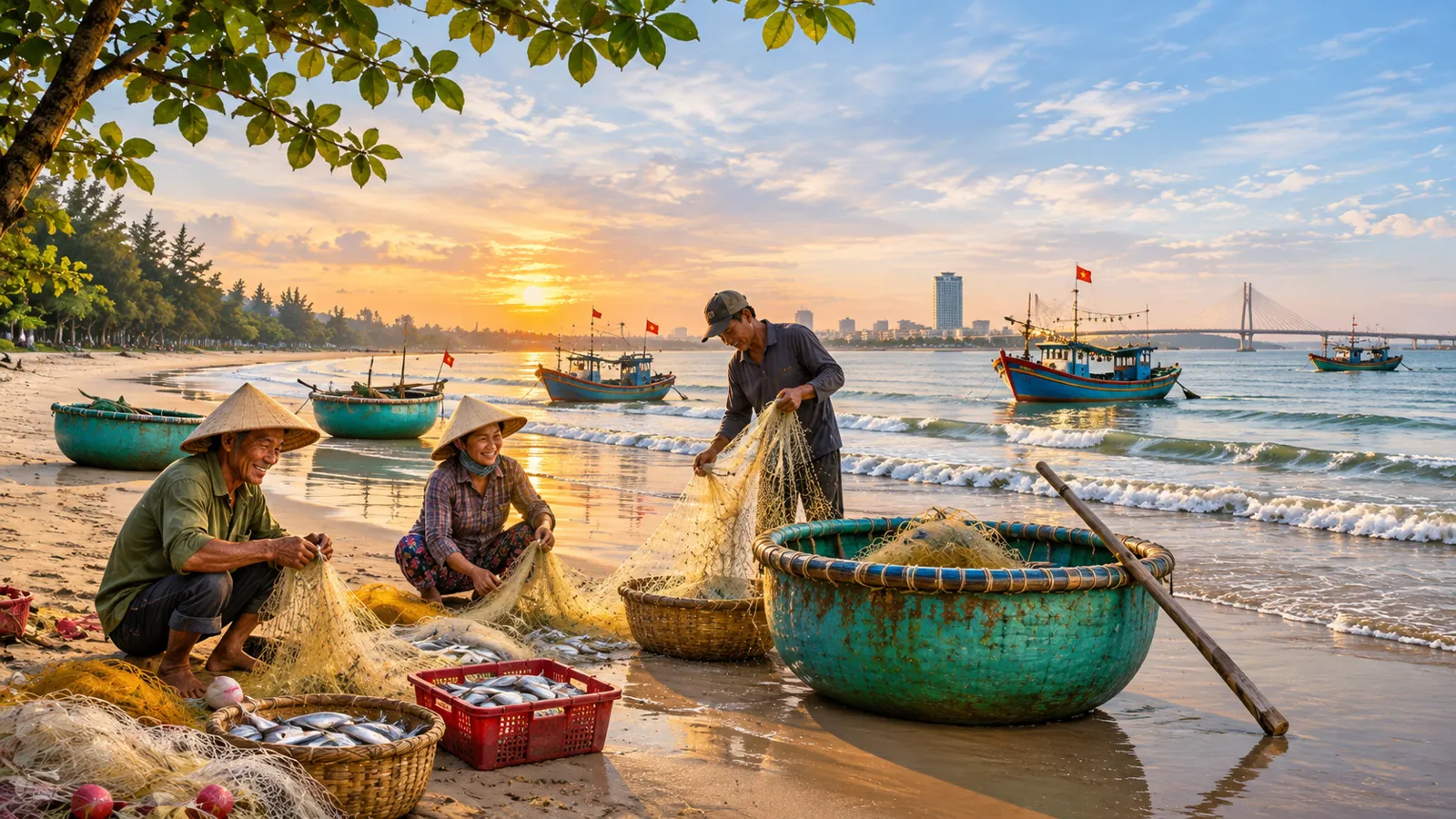
Dong Hoi offers a different mood — a river mouth, a long beach and seafood dinners. Best for: late arrivals, families based in Dong Hoi, or a lighter day after caving. Trade-off: swimming safety depends on weather, tides and the exact stretch of beach; swim only where conditions and supervision are suitable.
Quang Phu sand dunes
On the coast north of central Dong Hoi, the dunes give a sharp contrast to Phong Nha’s green karst. Go early or late, carry water and sun protection, and do not assume organised activities are running.
Countryside experiences around Phong Nha
Farms and rural hospitality around Phong Nha suit travellers who want to slow down. Choose operators with recent reviews and clear access arrangements; not every farm road or private property is open to visitors.
Where to stay: Phong Nha vs Dong Hoi

Disclosure: this page currently contains no affiliate booking links. Hotel links below go to official websites. If we add booking links in future, they will be clearly labelled. See our Affiliate Disclosure.
| Factor | Phong Nha | Dong Hoi |
|---|---|---|
| Strength | Caves, river, countryside | Coast, restaurants, transport links |
| Cave access | Short drives | Around 45–50 km each way |
| Airport and station | Onward road transfer needed | Close by |
| Accommodation style | Homestays, farmstays, boutique stays | City hotels, beachfront hotels |
| Best for | Nature, caves, outdoor activities | Short arrivals, beach time, family comfort |
Our decision: stay in Phong Nha for two or more cave days. Choose Dong Hoi only if you have a late arrival, an early departure or a beach-first plan — otherwise you add roughly two hours of driving to every cave day.
Meliá Vinpearl Quang Binh — Dong Hoi
Best for: travellers who want an established full-service hotel close to Dong Hoi’s dining and transport. The hotel sits beside the Nhat Le River; its official site lists it at about 3.6 km from Nhat Le Beach, 7.9 km from the airport and 49 km from the Phong Nha caves. Trade-off: every cave day starts with a long transfer.
Chay Lap Farmstay — Phong Nha Commune
Best for: families and nature-focused travellers who want to sleep close to Paradise Cave, Mooc Spring and Chay River–Dark Cave. Vietnamese press describes it as a 41-room property in Chay village, Phong Nha Commune, with a pool, restaurant and bar. Trade-off: it is outside the central village, so evening dining options depend on transport.
Homestays and guesthouses in central Phong Nha
Best for: solo travellers and anyone spending most of the day out exploring. Rather than naming businesses we have not verified, filter for recent photo reviews, a confirmed map pin, air-conditioning, hot water, transfer help and a written cancellation policy.
Farmstays among the rice fields
Best for: couples and photographers who value quiet countryside. Confirm the exact distance from the village, whether bicycles or scooters are available, and whether meals are served on site.
Price note: rates change by date, room type and occupancy. Compare the final payable total, breakfast inclusion, child policy and cancellation terms rather than a headline nightly price. For a broader framework, see How to Choose Where to Stay in Vietnam.
Where to eat
Local dishes worth trying
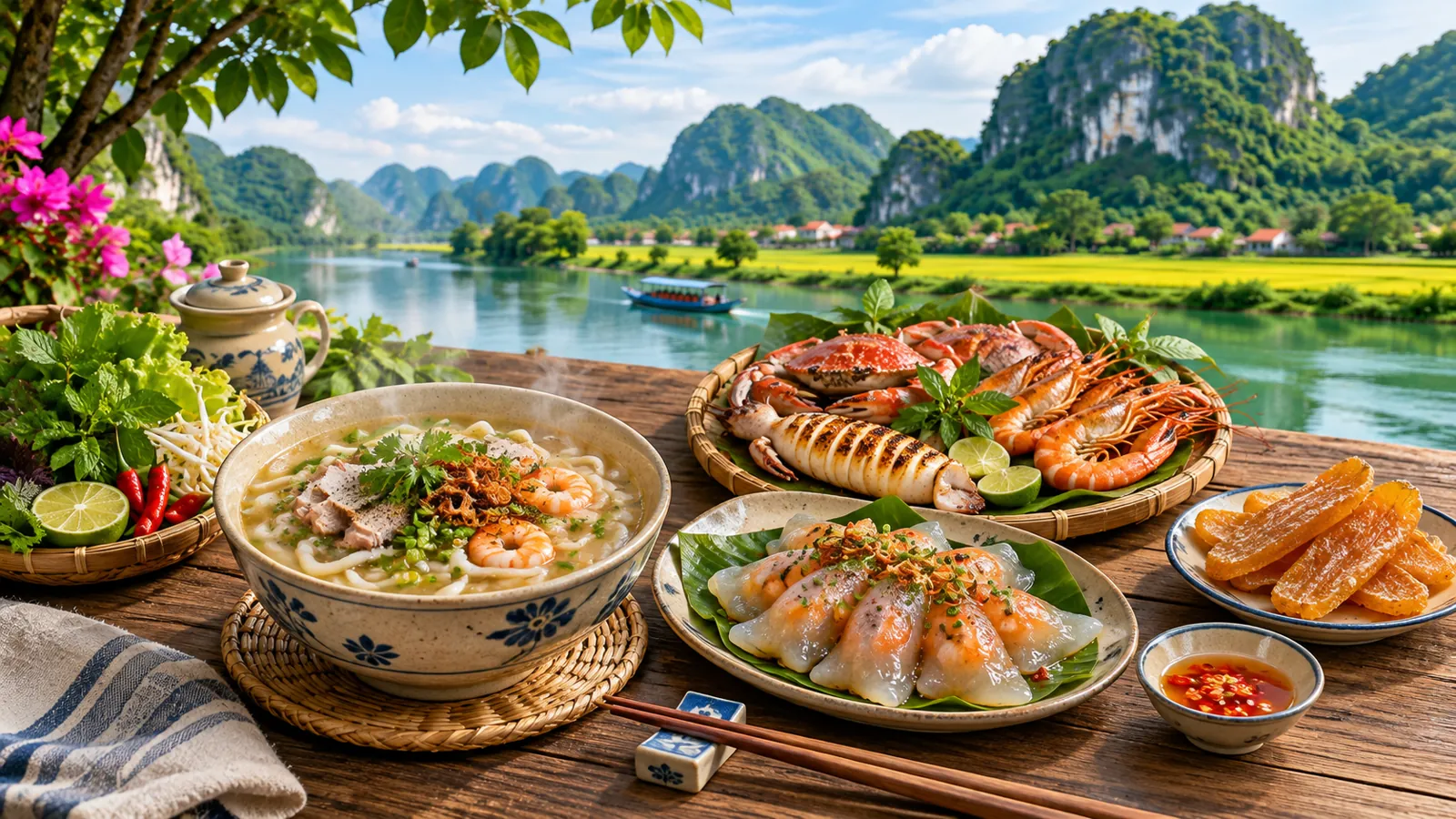
- Chao canh — thick noodle soup, often with fish or pork; a classic breakfast.
- Banh bot loc — chewy tapioca dumplings, usually with shrimp and pork, served with a dipping sauce.
- Fresh seafood — grilled or steamed, best near the Dong Hoi coast.
- Khoai deo — dried sweet potato, a popular local snack and souvenir.
Dong Hoi: the Truong Phap seafood strip
Many seafood restaurants line Truong Phap Street facing Nhat Le Beach. Seafood is usually priced by weight, so agree on the price per kilogram, the cooking charge and the total before anything goes into the kitchen. Choose a venue with a visible price list and recent reviews over a famous name with an outdated listing.
Phong Nha: casual dining after the caves
Central Phong Nha has casual Vietnamese and international restaurants and cafés geared to travellers. If you stay at a farmstay outside the village, on-site meals can be the easiest dinner option.
Ordering tips: state allergies clearly; fish sauce, shrimp paste and meat stock can appear in dishes that look vegetarian. Carry cash for smaller places.
Quang Binh vs Hue vs Ninh Binh
| Destination | Main strength | Trade-off | Best traveller |
|---|---|---|---|
| Quang Binh | Caves, rivers, karst countryside | Weather-sensitive highlights | Nature and outdoor travellers |
| Hue | Imperial heritage and cuisine | Little adventure | History and food lovers |
| Ninh Binh | Limestone scenery by boat, near Hanoi | Popular sites get crowded | Scenic day trips from the north |
Our decision: choose Quang Binh when caves and the outdoors are the centre of the trip. Quang Binh and Hue pair well on a central Vietnam route if you allow a full travel day between them. Continuing south? Compare bases in Da Nang vs Hoi An: Where to Stay, or see how central Vietnam fits a first trip in our 14-day Vietnam itinerary.
Best time to visit and the rainy-season plan
| Months | What to expect | Our advice |
|---|---|---|
| March–May | Generally comfortable for caves and countryside | Best all-round window for a first visit |
| June–August | Local peak season; hot on exposed ground | Book early; do demanding activities in the morning; watch storm forecasts from August |
| September–December | Main rainy and flood period | Book flexibly; expect river and water activities to pause on some days |
| January–February | Cooler, often grey; conditions vary | Possible, but check forecasts and operating notices |
Rain affects attractions differently. When water rises, boat access to Phong Nha Cave and water-based activities such as Chay River–Dark Cave are usually the first to stop. Dry caves such as Paradise Cave can sometimes keep operating, but they can also close for safety. After Storm No. 5 in August 2025, Phong Nha, Tien Son and Paradise caves reopened before the stream parks, which needed longer clean-up.
Reading this between October and December? Book refundable accommodation, keep Paradise Cave as your backup, check the national park’s notices the day before, and decide in advance whether you would still enjoy the trip if the main caves were closed. See Best Time to Visit Vietnam for how central Vietnam’s seasons compare with the north and south.
Two-, three- and four-day itineraries
Two days, one night — passing through
Day 1: arrive in Dong Hoi, transfer to Phong Nha, spend the late afternoon by the Son River and stay in Phong Nha.
Day 2: visit Phong Nha Cave or Paradise Cave, depending on conditions, then return to Dong Hoi for onward travel.
Trade-off: little time for the coast or Dong Hoi’s food.
Three days, two nights — recommended
Day 1: arrive in Dong Hoi, eat locally and see the waterfront or Nhat Le Beach if the weather allows; transfer to Phong Nha in the afternoon.
Day 2: one headline cave in the morning, countryside or a lighter second stop in the afternoon. Stay in Phong Nha.
Day 3: a relaxed bicycle ride or short scenic outing, then return to Dong Hoi.
Wet-weather swap: if the river is high, switch Day 2 to Paradise Cave and move the boat trip to Day 3 morning if it reopens.
Four days, three nights — relaxed
Day 1: Dong Hoi arrival, local food and coast.
Day 2: Phong Nha Cave and the Son River.
Day 3: Paradise Cave or a suitable guided adventure, then countryside time.
Day 4: unhurried breakfast, optional short visit and departure.
For travellers with limited mobility or young children, replace demanding activities with gentle sightseeing and rest.
Costs, accessibility and safety
Budget by category, not by headline price
- Transport to Dong Hoi
- Transfers between Dong Hoi and Phong Nha
- Accommodation for two or three nights
- Cave tickets, boat charges and guided activities
- Meals, local transport and a contingency fund
Some attractions charge per person while boats may be charged per boat, so a single entry ticket may not reflect the real cost for a small group. Ask for an itemised total before paying.
Getting around
A private driver is practical for families and multi-stop days. Ride a motorbike only if you are legally licensed, insured and confident on rural roads; avoid unfamiliar routes after dark or in heavy rain.
Accessibility
Expect stairs, wet walkways, uneven surfaces and boat transfers. Contact operators directly if anyone in your group uses a wheelchair or cannot manage steep steps.
Safety
- Follow park and cave staff instructions, and never enter closed routes
- Do not swim independently in rivers or caves
- Wear grippy footwear for wet, uneven ground
- Insist on life jackets and certified guides for water activities
- Monitor official weather and flood warnings
- Stay on permitted routes and never touch or remove cave formations
Before booking boats or outdoor activities, review our Vietnam Travel Safety Guide.
Frequently asked questions
Is Quang Binh still a province in 2026?
No. The former Quang Binh Province became part of Quang Tri Province on 1 July 2025. Quang Binh remains a common travel name, and Phong Nha is now Phong Nha Commune, Quang Tri Province.
Should I stay in Phong Nha or Dong Hoi?
Stay in Phong Nha for caves and the national park. Stay in Dong Hoi for the beach, city dining and easier airport or rail connections.
How many days do I need?
Three days and two nights is a good starting point. Allow four days to combine caves, countryside and the coast without rushing.
Can I still book Son Doong for 2027?
Unlikely. Oxalis Adventure is the only licensed operator, and in March 2026 Vietnamese media reported that the 2026 and 2027 seasons were fully booked. Check Oxalis directly for later seasons and fitness requirements.
What happens if Phong Nha Cave is closed by high water?
Boat access to Phong Nha Cave is one of the first activities to pause when the Son River rises. Paradise Cave is often the better backup, but it can also close for safety, so check operating notices the day before.
Is Quang Binh suitable for children?
Yes, with the right plan: choose established visitor caves, countryside scenery and comfortable accommodation rather than defaulting to adventure packages.
Can I visit during the rainy season?
Possibly, but flooding and closures can reshape your itinerary from roughly September to December. Book flexibly and confirm conditions close to your travel dates.
Is Quang Binh worth visiting without a cave tour?
Yes for beaches, countryside and food — but the caves are the region’s most distinctive attraction, so the trip is less compelling without at least one.
Editorial standards, sources and disclosure
This is a desk-researched guide. RoamDecide has not personally inspected the hotels, restaurants, caves or tours described. Prices, tickets, schedules, opening hours and weather-related closures change; verify before you travel. No commission or commercial relationship decides which places we include — see How We Recommend.
Disclosure: this page currently contains no affiliate links. Hotel links go to official websites.
Last verified: 9 November 2026.
Key references
- Phong Nha–Ke Bang National Park and Hin Nam No National Park — UNESCO World Heritage Centre
- UNESCO approves first transboundary natural World Heritage site in Southeast Asia, July 2025 — Government of Vietnam
- Resolution on provincial administrative restructuring — Government of Vietnam (Vietnamese)
- Commune-level units of Quang Tri Province from 1 July 2025, incl. Phong Nha Commune — Thu Vien Phap Luat (Vietnamese)
- Dong Hoi, Dong Thuan and Dong Son wards — Thu Vien Phap Luat (Vietnamese)
- Former Quang Phu commune within Dong Thuan ward — Thu Vien Nha Dat (Vietnamese)
- Visitor numbers and September 2026 high-water pauses — Phong Nha–Ke Bang National Park (Vietnamese)
- Phong Nha–Ke Bang sites reopen after Storm No. 5, August 2025 — Bao Quang Tri (Vietnamese)
- Phong Nha boat trips may pause when the Son River rises — Quang Binh Travel (Vietnamese)
- Seasonality of Phong Nha–Ke Bang tourism, May 2026 — Nhan Dan (Vietnamese)
- Son Doong expedition fully booked for 2026 and 2027 — VOV World
- Son Doong booking information — Oxalis Adventure
- Paradise Cave steps and shuttle — Vietnam Airlines travel guide (Vietnamese)
- Meliá Vinpearl Quang Binh — official website
- Chay Lap Farmstay profile — Tuoi Tre (Vietnamese)
- Seafood restaurants on Truong Phap Street, post-merger addresses — Vinpearl guide (Vietnamese)
- A Complete Guide to Phong Nha — Vietnam Tourism