
By RoamDecide Editorial Team · Last researched October 14, 2026
Hanoi rewards travelers who enjoy exploring historic streets, local food, lakeside walks and café culture. But the best time to visit Hanoi depends on more than sunny skies: heavy rain, winter air quality, Tet holiday closures and spring humidity all change the experience. This research-based guide compares the trade-offs, so you can choose dates that fit your trip.
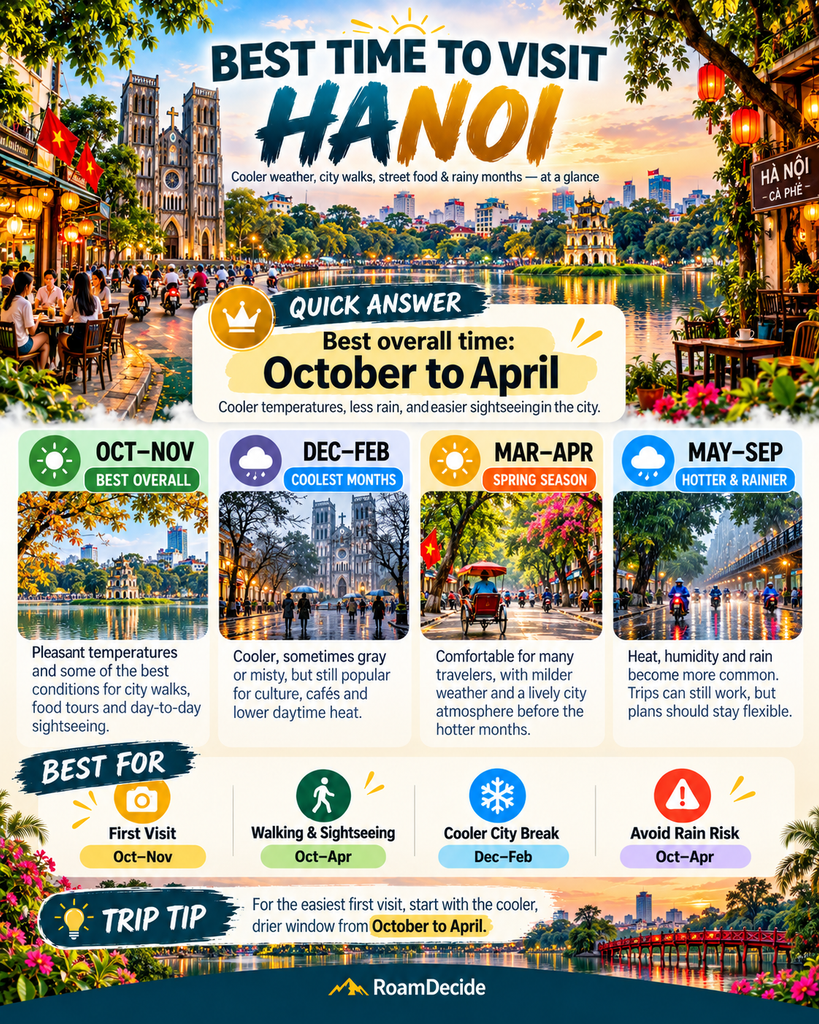
Quick Answer: When Is the Best Time to Visit Hanoi?
Best overall: October–November. For a first visit centered on walking, food tours and sightseeing, these months offer the best balance. Historical reference averages show October at 21.6–28.4°C with 122 mm of rain and November at 17.8–25.0°C with 62 mm. Explore the Vietnam-wide seasonal comparison if your trip includes other regions.
- December–January: cooler conditions for cafés and museums; monitor air quality and check room heating.
- February around Tet: excellent for experiencing Lunar New Year culture, but transport and business opening arrangements change.
- March–April: a spring alternative with warmer weather, though drizzle and nồm humidity may reduce comfort.
- May–September: hotter and wetter; keep outdoor plans flexible.
2027 alert: Lunar New Year’s Day is February 6, 2027. The public-sector holiday runs February 4–10, but private businesses select their own arrangements. Verify tour, restaurant and transport availability before paying. Government News: 2027 Tet schedule.
Hanoi Weather by Month: Temperature and Rainfall
This table contains historical modelled reference averages (1991–2021), not measurements directly extracted from a specific Hanoi station and not a forecast for 2027. The secondary source publishes inconsistent rainy-day figures, so rainy-day counts are intentionally omitted. Climate-Data.org: Hanoi.
| Month | Avg low °C | Avg high °C | Rainfall mm |
|---|---|---|---|
| Jan | 13 | 19.3 | 47 |
| Feb | 15.1 | 21.8 | 37 |
| Mar | 17.9 | 24.7 | 61 |
| Apr | 21.7 | 28.8 | 109 |
| May | 24.3 | 30.9 | 242 |
| Jun | 26 | 32.5 | 236 |
| Jul | 26 | 32.2 | 272 |
| Aug | 25.3 | 31.4 | 310 |
| Sep | 24 | 30.4 | 225 |
| Oct | 21.6 | 28.4 | 122 |
| Nov | 17.8 | 25 | 62 |
| Dec | 13.6 | 20.7 | 37 |
Why RoamDecide’s recommendation differs from Vietnam Tourism
Vietnam Tourism identifies April–June and September–December as useful Hanoi travel periods. We give greater weight to walking comfort and monthly rainfall: the reference dataset shows over 230 mm monthly rainfall in May–June and 225 mm in September. October–November therefore ranks higher for walking-focused first trips. This is a difference in traveler priorities, not a claim that official tourism advice is wrong.
Hanoi Travel Decision Matrix
| Choose | If you want | Trade-off / reconsider if |
|---|---|---|
| Oct–Nov | First trip, long walks, food tours | Compare central hotel rates during popular dates |
| Dec–Jan | Cool weather, museums, cafés | Winter AQI and chilly accommodation concern you |
| Feb near Tet | Holiday culture | You need normal restaurant and transport availability |
| Mar–Apr | Spring city and regional travel | You dislike drizzle and humidity |
| May–Sep | Flexible sightseeing and indoor alternatives | You want predictable outdoor weather |
Before You Book: Three Hanoi Factors Many Guides Miss
1. Tet 2027: The City Runs on Different Schedules
Tet’s first day falls on Saturday, February 6, 2027. Government-announced public-sector holidays run February 4–10; private employers may choose among applicable arrangements. Some family-run restaurants and independent shops may close for several days while others continue operating. Verify hotel check-in, airport transfer, food-tour operations and intercity transport before making non-refundable bookings. Expect greater travel demand around the holiday, but do not assume every business closes for the same period. Official holiday announcement.
2. Winter Air Quality: A Real Trade-off
The Hanoi Department of Agriculture and Environment, in an October 9, 2026 republication of Government News, reported that Hanoi’s annual average PM2.5 exceeded 40 µg/m³ in 2023–2025 and reached 48.5 µg/m³ in 2025. Pollution concentrates broadly between September and April; episodes can begin in October and are a particular concern from November to March. These are historical pollution data, not a daily prediction. Source: Hanoi environmental reporting.
If traveling with children, older adults or people with respiratory conditions, review the official Hanoi AQI portal and its health advice. On poor-air days, consider shorter outdoor sessions, suitable particulate-filtering protection and indoor alternatives.
3. Spring Drizzle and Nồm Humidity
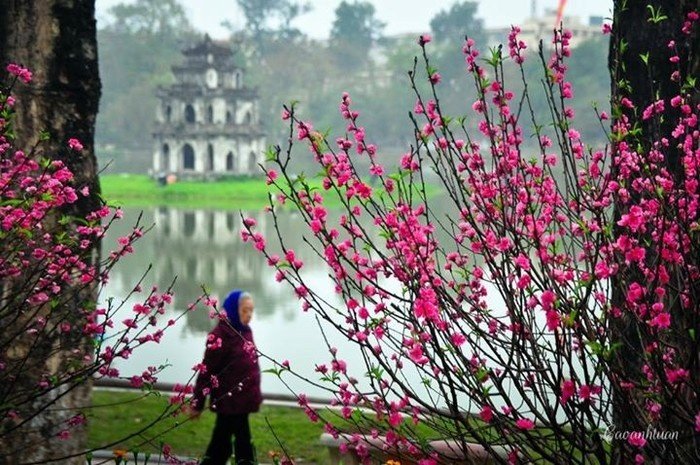
From late winter into spring, Hanoi can experience nồm: very humid conditions where warm moist air condenses on cooler surfaces. Even when monthly rainfall totals are relatively low, rooms and floors may feel damp. For February–April stays, ask about ventilation or dehumidification. In December–January, also ask whether heating is actually provided; an air conditioner is not necessarily a heater.
Best Time to Visit Hanoi by Season
October–November: Best Overall
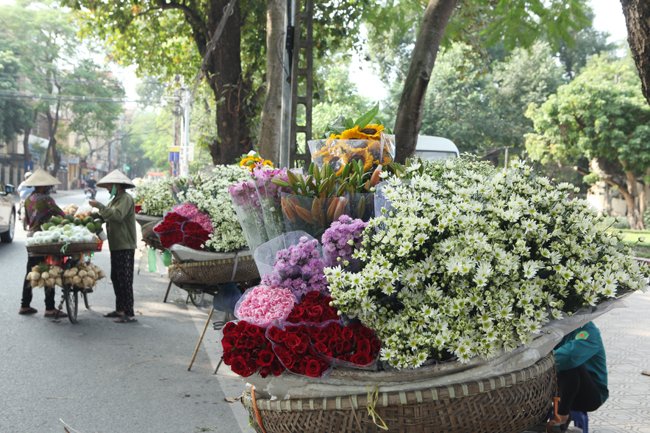
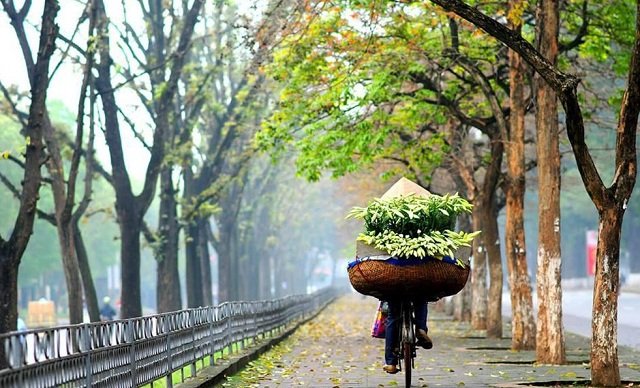
October averages 21.6–28.4°C and 122 mm of rain; November cools to 17.8–25.0°C with 62 mm. That is a practical combination for Hoan Kiem Lake, the Old Quarter, street-food stops and photography. Autumn’s tree-lined streets and seasonal hoa sữa (milk-flower) fragrance add atmosphere, though flowering dates are not guaranteed. For a walkable base, read Where to Stay in Hanoi and compare noise, location and rates.
December–January: Cool City Days
The reference data show lows/highs of 13.6–20.7°C in December and 13.0–19.3°C in January. Vietnam Tourism cautions that cold spells can take temperatures down toward 10°C between late December and March. Museums and cafés suit cooler days, but gray weather, poor air quality and accommodation without heating can affect comfort.
February–April: Tet, Spring and Humidity
Temperatures rise from 15.1–21.8°C in February to 21.7–28.8°C in April. This period has less heavy rain than summer, but that does not imply reliably sunny or dry conditions. Drizzle and nồm can be uncomfortable. February 2027 also calls for special Tet logistics. Prefer flexible food plans and accommodation with reliable climate control.
May–September: Hot, Humid and Rainier
Historical rainfall rises to 242 mm in May, 236 mm in June, 272 mm in July and 310 mm in August; September remains wet at 225 mm. This is not a reason to avoid Hanoi entirely, but it favors earlier walks, midday breaks and plans that can shift between outdoor sites, museums and cafés. If combining with a cruise, check marine-weather policies rather than relying on city conditions.
Hanoi Month-by-Month Travel Guide
| Month | Typical low–high | Rain | Good for / Watch out |
|---|---|---|---|
| January | 13–19°C | 47 mm | Cool-weather cafés and museums; cold spells and AQI |
| February | 15–22°C | 37 mm | Tet culture; Feb 6 holiday and business closures |
| March | 18–25°C | 61 mm | Spring walking; drizzle, nồm and AQI |
| April | 22–29°C | 109 mm | Spring sightseeing; warmer afternoons |
| May | 24–31°C | 242 mm | Flexible city stays; increasing rain and heat |
| June | 26–33°C | 236 mm | Indoor culture; heat and humidity |
| July | 26–32°C | 272 mm | Flexible itineraries; heavy showers |
| August | 25–31°C | 310 mm | Short visits; wettest reference month |
| September | 24–30°C | 225 mm | Transition trips; rain still significant |
| October | 22–28°C | 122 mm | Walking and food; compare central accommodation |
| November | 18–25°C | 62 mm | First visits and photography; popular dates |
| December | 14–21°C | 37 mm | Cool city breaks; heating and winter AQI |
Figures are rounded secondary historical climate averages, not predictions for any particular day in 2027. The seasonal advice is RoamDecide’s travel-purpose interpretation.
Local Experiences That Change With the Season
Hoan Kiem Lake and the Old Quarter
Walking works better when temperatures are manageable. The weekend pedestrian area around Hoan Kiem can be a highlight, but its operating arrangements may change during events and holidays; check locally. Old Quarter noise also varies by street and accommodation rather than season alone.
Hanoi Street Food and Autumn Atmosphere
Cafés, pho, bun cha and small food shops make cooler-weather exploration attractive. In autumn, hoa sữa scents and lively streets are part of the city’s identity, but do not schedule a trip solely for an unverified flowering date. At Tet, check individual vendors’ opening days instead of trusting generic opening-hour listings.
Combining Hanoi With Northern Vietnam
Hanoi + Ha Long Bay: November Is the Preferred Overlap
November is our preferred overlap for walking around Hanoi and taking a Ha Long cruise. October may still work with flexible cruise dates because late storms are possible; April is the spring alternative. Winter can bring mist over the bay, while summer storms may cause cruise suspensions. Read when to visit Ha Long Bay and compare day trips versus overnight cruises. Check the operator’s weather cancellation and rescheduling terms before booking.
Hanoi + Ninh Binh: Golden Rice Is a Different Window
Ninh Binh tourism information dated May 19, 2026 places the golden Tam Coc rice-field period in late May to early June, even though Hanoi is already hot and wet. The photogenic peak can be brief, roughly a couple of weeks, and may attract many visitors; exact harvest dates and crowd levels vary and should be confirmed locally. Choose these dates if rice scenery matters most, or October–November for easier combined city and countryside sightseeing. Ninh Binh tourism’s seasonal report. For pacing, see day trip versus overnight stay.
Hanoi + Sapa: Don’t Treat the Mountains Like the City
Sapa’s terraces can turn golden around late September to early October, depending on harvest timing; October–November may offer comfortable trekking conditions, but the golden crop is not guaranteed throughout this period. Winter can be cold, cloudy and foggy, with frost or occasional snow at higher elevations. Read the Sapa seasonal guide before choosing travel dates.
Where to Stay in Hanoi: Three Seasonal Checks
- Winter: verify heating and hot water before reserving a budget room.
- Tet: confirm hotel check-in and transfer arrangements during February 4–10, 2027.
- Every season: compare street noise, walking distance and flexible cancellation terms.
For the full neighborhood comparison, read Where to Stay in Hanoi. For onward travel planning, see How to Get Around Vietnam.

Frequently Asked Questions
Is Hanoi crowded during Tet 2027?
Holiday travel routes can be busy even while some residential streets feel quieter. Family-run businesses may close on different dates. The public-sector holiday runs February 4–10, but private opening schedules vary.
Is Hanoi’s air quality worse in winter?
Official Hanoi environmental reporting identifies a greater seasonal pollution concern during the cooler dry months, especially November–March. Check live VN_AQI guidance rather than relying only on seasonal averages.
Can I combine Hanoi with a Ha Long Bay cruise in August?
Yes, but keep alternatives and verify cancellation terms. August is the wettest month in the climate reference table, and storms can disrupt cruise operations.
Does low rainfall mean Hanoi is dry in March?
No. Fine drizzle and nồm humidity can make late-winter and spring conditions damp despite relatively low monthly precipitation totals.
What should I pack for Hanoi’s seasons?
Bring walking shoes year-round. Add warm layers for December–January and cold spells, moisture-tolerant footwear for spring, and breathable clothing with rain protection for May–September.
Should I book an Old Quarter hotel during Tet?
It can be convenient, but verify the hotel’s service schedule, your transfer arrangements and whether nearby food businesses will be operating on your dates.
Final Recommendation
Choose October–November for the easiest walking-focused first visit. Consider December–January for cooler travel if you monitor air quality; February around Tet for holiday culture if you accept closures; March–April for spring with some damp conditions; and May–September for flexible urban travel. If Ha Long Bay, Sapa or Ninh Binh is your main goal, choose dates using that destination’s own seasonality rather than Hanoi alone.
Sources and Editorial Methodology
RoamDecide Editorial Team · Last researched October 14, 2026. This guide uses a secondary 1991–2021 compiled climate dataset, official Vietnam Tourism destination-season information, the October 2026 Government News Tet announcement, Hanoi Department of Agriculture and Environment reporting, and Ninh Binh tourism materials. RoamDecide weights rainfall exposure, walking comfort, logistics and traveler-specific risks. The climate figures are modelled reference averages, not observations from a specific Hanoi weather station. They do not predict 2027 weather; future data-quality work may compare the figures with QCVN 02:2022/BXD Appendix A station records.
Sources: Hanoi historical climate reference; Vietnam Tourism climate guidance; official Tet 2027 dates; Hanoi air quality reporting; live AQI monitoring; Tam Coc rice-season report.
This is desk-based travel research, not a claim of firsthand testing of specific hotels, tours or transport suppliers. No affiliate link is included in this article.