
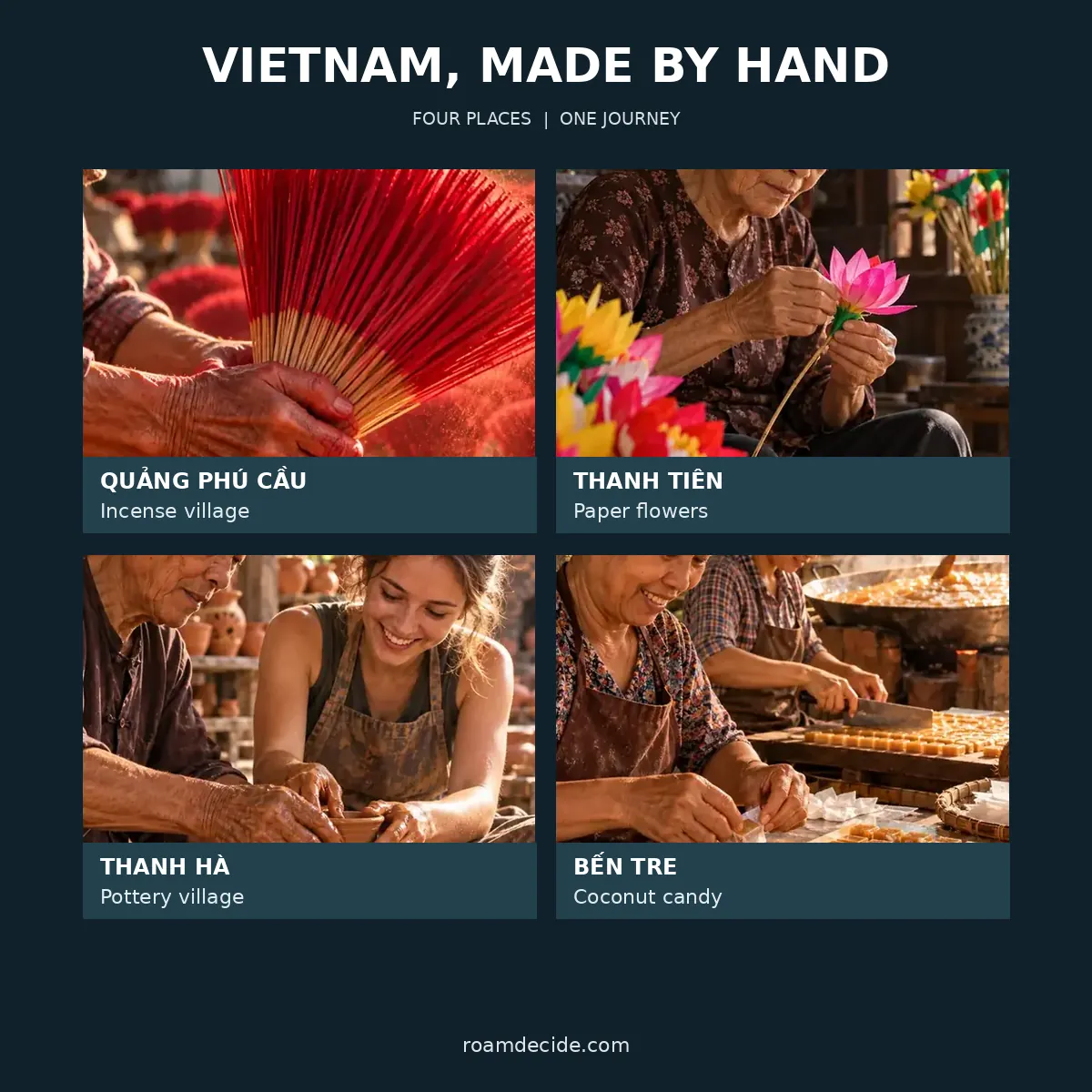
Vietnam is made by hand. Away from the busiest tourist stops, village workshops tell stories of family skills, ritual, everyday life, and extraordinary patience. These four stops let you meet the people behind the objects, not just collect another photo.
1. Quảng Phú Cầu incense village, Hanoi
Southwest of central Hanoi, Quảng Phú Cầu is known for brilliant red and pink incense sticks spread in fan-shaped bundles to dry. The striking patterns are part of a working craft, where bamboo is prepared, dyed and processed into incense sticks. Before Tết, incense also carries cultural meaning in homes and places of worship.
What to do: Observe the drying yards, photograph the color patterns from permitted areas, and ask before entering a family’s workspace. Plan: A half-day trip from Hanoi is practical, though actual drying scenes depend on weather and production. There is no guarantee that every yard will be accessible.
2. Thanh Tiên paper flower village, Huế
Near the Perfume River, Thanh Tiên has preserved a paper-flower craft for more than 300 years. Artisans shape delicate blossoms from paper and bamboo, creating brilliant arrangements associated with worship and Tết customs. Pink lotus-inspired flowers and vivid red, yellow and green creations make this a memorable stop for people interested in culture and craft.
What to do: Watch an artisan cut, fold and assemble flowers; seek a workshop that welcomes visitors and purchase flowers directly where available. Plan: Combine the village with a Huế cultural day. Contact a workshop before arrival, especially outside the busy seasonal production period.
3. Thanh Hà pottery village, near Hội An
Only around 3 km from Hội An Ancient Town, Thanh Hà has made pottery since the 16th century. Here, wet clay becomes bowls, jars and small souvenirs under practiced hands. Visitors can often watch traditional techniques and try shaping clay themselves with an artisan’s guidance.
What to do: Try a guided pottery experience, walk the village and learn about firing. Plan: Allow about one to two hours, plus travel. If you want to keep your creation, ask whether drying and kiln firing are included and when it can be collected. Check tickets and workshop arrangements locally.
4. Bến Tre coconut candy workshops, Mekong Delta
In coconut-growing Bến Tre, a humble sweet brings visitors close to an everyday food tradition. Coconut milk and sugar are cooked into a rich mixture, then cooled, cut and wrapped. Visiting a workshop offers a close look at the process and an opportunity to taste a local specialty.
What to do: Watch candy-making and packaging, sample different varieties where offered, then explore coconut-lined waterways by boat or bicycle. Plan: Bến Tre makes a rewarding Mekong Delta day trip from Ho Chi Minh City, but individual factory hours and tour inclusions vary.
Which village is right for you?
- Photography: Quảng Phú Cầu, for incense patterns and warm light.
- Cultural heritage: Thanh Tiên, for hand-crafted paper flowers and Tết traditions.
- Hands-on experience: Thanh Hà, for shaping your own pottery.
- Food and family travel: Bến Tre, for coconut candy and river scenery.
Before you go
These destinations are spread across different parts of Vietnam and are not a single four-stop day trip. Choose a village based on your planned route. Workshops are places of work: always ask permission to photograph people, keep paths clear, respect artisan time and confirm opening arrangements directly. The images used to illustrate our Reel are artistic visualizations, not documentary proof of a particular workshop or its current operation.
Sources and further reading: Vietnam Tourism on Quảng Phú Cầu; Vietnam Government News on Thanh Tiên; Hội An World Heritage on Thanh Hà; Vietnam Tourism on Bến Tre.