
How to reach the far-southern melaleuca forest, compare visitor experiences, understand 2026 conservation updates and plan around current access restrictions.
Last researched: 5 November 2026 · Independent research, not a firsthand visit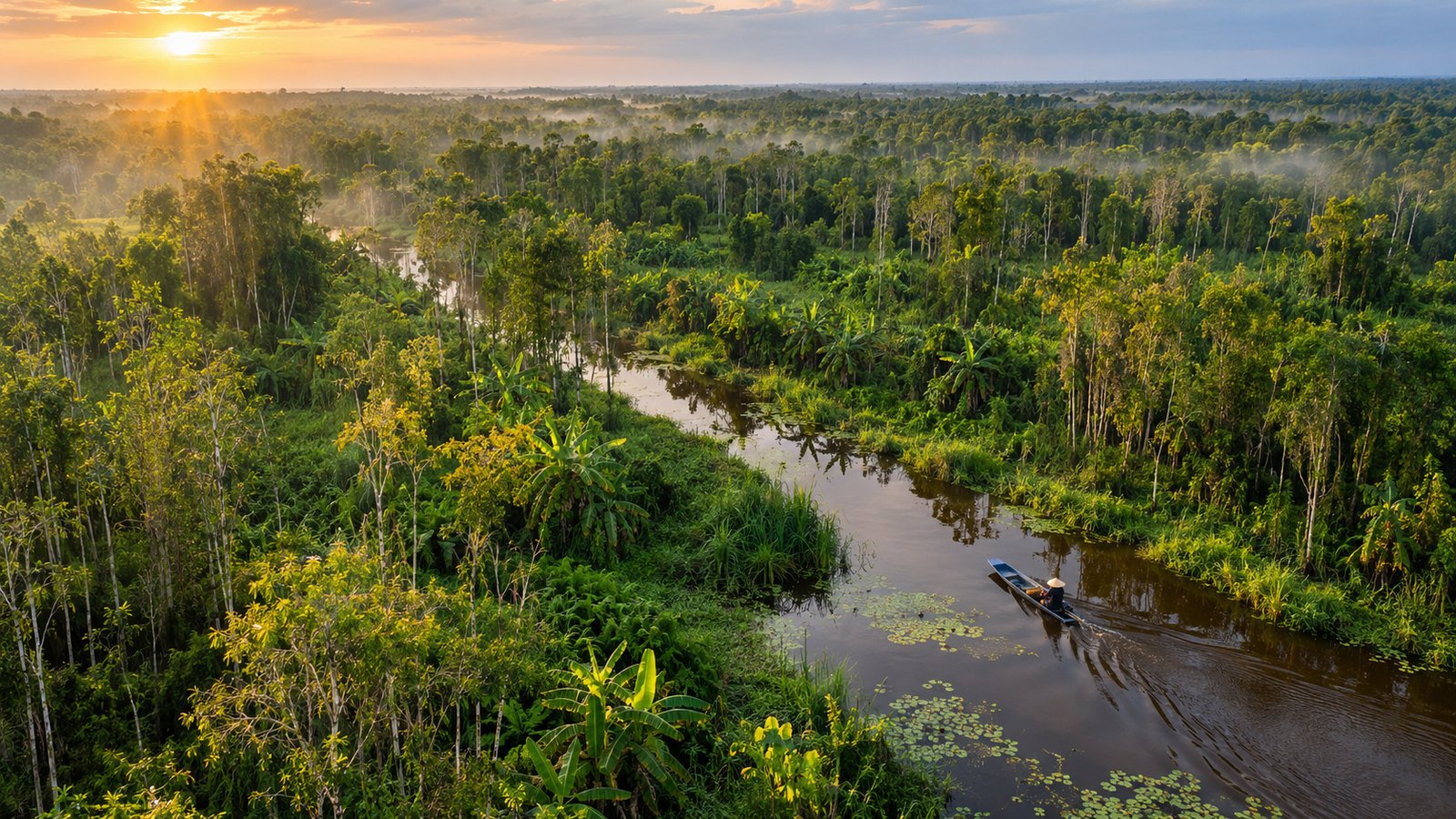
U Minh Ha at a glance
Is it worth visiting? Yes, particularly for travelers interested in freshwater wetlands, traditional honey gathering, forest conservation and quieter southern Vietnam. The experience is less predictable than a developed theme park: permissions, water levels, forest-fire conditions and private operators’ schedules matter.
| Location | Ca Mau Province, southern Vietnam; park territory includes Da Bac and Khanh An communes |
|---|---|
| Protected park | Approx. 8,527.8 hectares |
| Main experience | Melaleuca forest, peat wetland ecology, authorized forest excursions |
| Base | Central Ca Mau for easier transport and accommodation |
| Distance | Published reference about 26 km from central Ca Mau, depending on entrance; not independently route-measured |
| Suggested stay | Half-day to full-day forest visit; 1–2 nights in Ca Mau |
| Main restrictions | Forest-fire prevention, boat permissions, waterway safety and fallen trees |
Geography matters: U Minh Ha is in Ca Mau; U Minh Thuong is a separate national park in An Giang following the 2025 province reorganization. Ca Mau Cape, the famous southernmost mainland landmark, is a different destination and ecological setting.
U Minh Ha vs U Minh Thuong
| Decision | U Minh Ha | U Minh Thuong |
|---|---|---|
| Province | Ca Mau | An Giang (former Kien Giang area) |
| Best for | Peat wetland, melaleuca forest and local honey culture | Wetland biodiversity and conservation-focused visits |
| Recognition | Part of Mui Ca Mau UNESCO Biosphere Reserve | Ramsar site, ASEAN Heritage Park; part of Kien Giang Biosphere Reserve |
| Regional base | Ca Mau urban area | Former Kien Giang region |
U Minh Ha was established as a national park in 2006, following the former Vo Doi Nature Reserve. U Minh Thuong reopened for visitors on May 28, 2026 after a period of elevated fire risk; recreational fishing remained suspended when reopening was reported, partly to protect aquatic breeding. Both parks can impose temporary restrictions. These are not interchangeable stops on a one-day trip.

AI illustration · Concept only

AI illustration · Concept only
AI illustration · Concept only
Melaleuca forest and rare peat wetlands
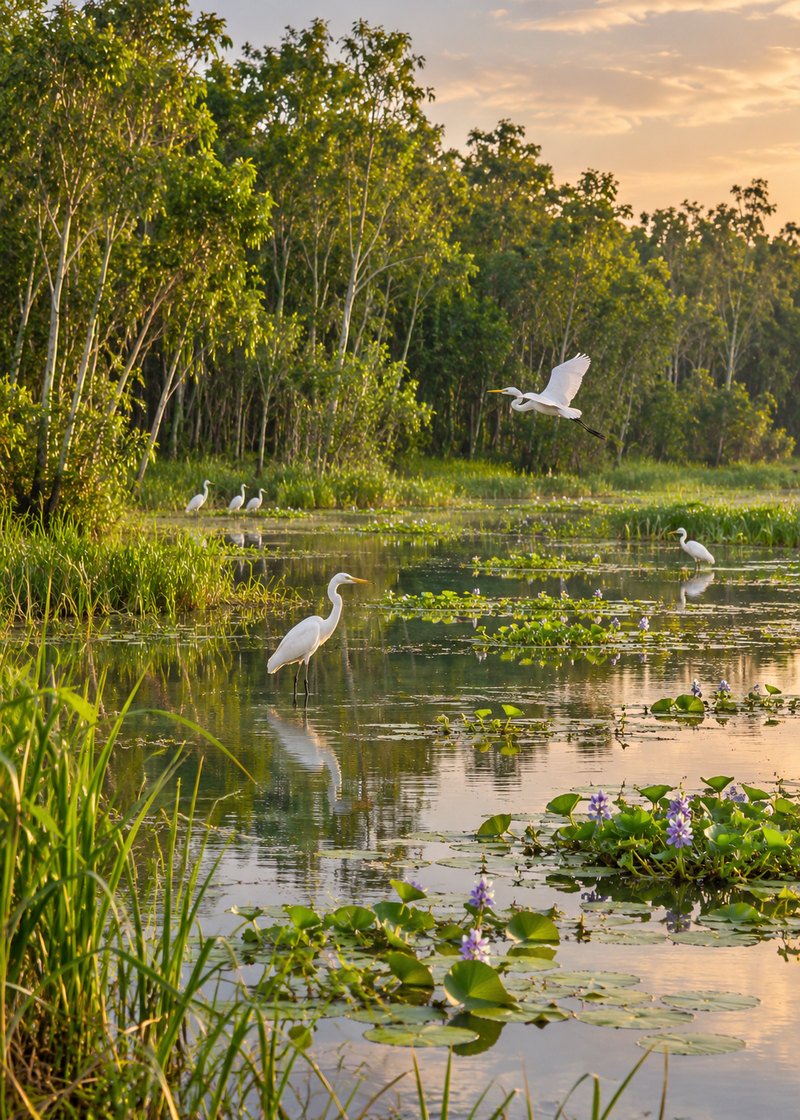
Melaleuca trees, called tram, grow around dark, tannin-influenced freshwater channels. Their pale bark, thin foliage and wetland reflections give U Minh Ha its recognizable landscape. Water levels and available visitor routes change with seasons; dark water is not proof that it is safe to drink or swim in.
Provincial figures reported in 2026 describe peat approximately 0.5–1.5 metres deep over around 2,658 hectares, about 31% of the national park. Earlier peat-area estimates were substantially different, reflecting distinct surveys and historical peat loss. These are official figures reported by news outlets, not a measurement performed by RoamDecide.
The entire park is not untouched primary forest. A 2024 Dong Thap University Journal paper, using park land figures from 2021, described 7,632.1 hectares of forested land, including 5,871.4 hectares of planted forest, around 76.9% of its forest-area dataset. The distinction is relevant to interpretation, not an argument against conservation value.
The 2026 conservation challenge
U Minh Ha drew national attention in 2026 as melaleuca trees declined and fell in some areas. By July, provincial reporting grouped almost 860 hectares into different categories; it did not claim every hectare had died.
| Area | Preliminary classification |
|---|---|
| Strictly protected zone | About 300 ha of degraded forest |
| Strictly protected zone | About 467 ha showing signs of decline |
| Ecological restoration zone | About 92 ha of degraded natural forest |
Authorities described the problem as multifactorial, involving hydrology, peat, acidic soils, extreme weather and forest succession. They did not find sufficient scientific evidence to identify water management as the sole or main cause, but did not exclude unsuitable regulation as one potential factor. These distinctions matter when evaluating visitor access and conservation measures.
Four ways to experience U Minh Ha
U Minh Ha National Park
Best for: Ecology, forest observation and learning about peat wetlands. Visitor routes and boat access require current confirmation from park management. Road approaches commonly mentioned include DT985C and DT984 from An Xuyen.
Trade-off: Most conservation-focused, but access and facilities are variable.
Ca Mau Eco
Best for: Travelers wanting managed food, activities and accommodation concepts. The operator advertises these services, but this guide has not independently confirmed their current availability.
Muoi Ngot Ecotourism
Best for: Traditional bee-rafter culture and rural cooking. Its presence in 2026 regional event coverage supports its existence, but exact activity packages, booking details and ownership of any similarly named website must be checked.
Trade-off: Rustic and season-dependent.
Other local operators
Old directory listings do not establish that a business remains open today. Require a current address, operator contact, written quote, safety conditions and cancellation terms before committing.
| Experience | Natural focus | Facilities | Boat trip |
|---|---|---|---|
| National park | High | Variable | When authorized |
| Ca Mau Eco | Managed setting | Operator-advertised | Check package |
| Muoi Ngot | Local forest culture | Rustic | Confirm season |
| Other | Varies | Unverified | Confirm |
Decision tip: Choose one main experience for a half-day. Do not assume recreational activities at a private venue grant access to protected core areas.
Gac keo ong: a living cultural heritage
Traditional gac keo ong, or bee-rafter honey keeping, is among the area’s most distinctive living traditions. In 2019, Vietnam’s Ministry of Culture, Sports and Tourism added the practice to the national inventory of intangible cultural heritage. The practice uses prepared wooden rafters positioned by knowledgeable local honey gatherers to encourage bees to build hives in suitable forest conditions.
The expertise involves understanding bee behavior, seasonal melaleuca flowering and ethical harvesting practices. Some businesses promote demonstrations, but real harvesting cannot be guaranteed on every date. Before booking, ask whether you will observe an active harvest, see an educational demonstration or attend a tasting. Visitors with severe sting allergies should avoid close-contact activities.
Best time to visit
December–April: Generally drier weather may ease road travel, but fire risk increases at parts of the dry season and forests may restrict visitors. May–November: Rain and seasonal water can produce lush scenery, but storms and water conditions may interrupt boats or road access. The ideal period depends on what is actually operating, not a fixed promotional calendar.
Local accounts describe traditional honey-keeping preparations linked to lunar-season timing, but this should not be presented as a guaranteed tourist season. For broader context, read Best Time to Visit Vietnam.
Getting there from HCMC or Can Tho
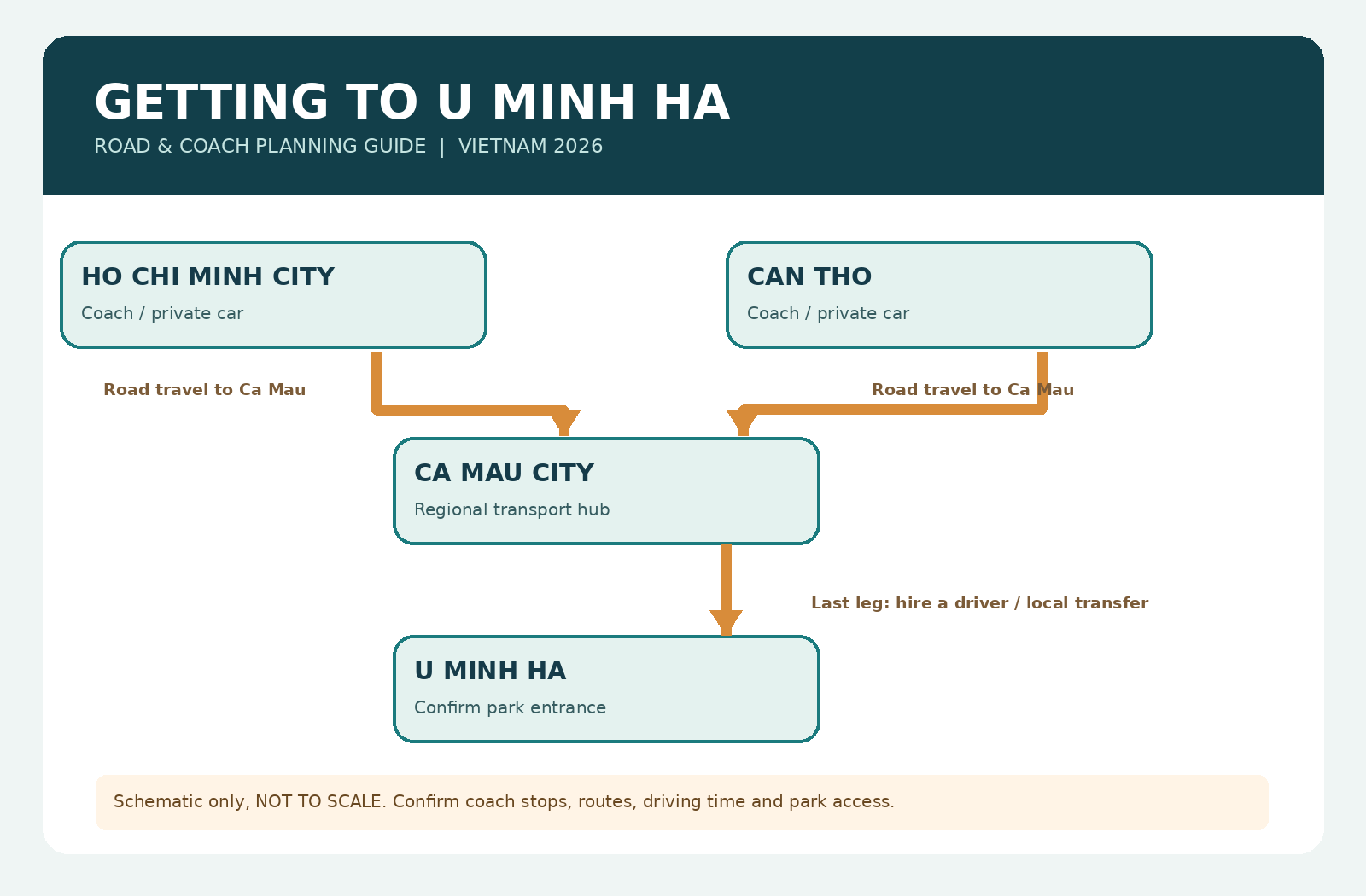
Step 1: Get to Ca Mau. From either Ho Chi Minh City or Can Tho, use a confirmed intercity coach or private vehicle to reach the Ca Mau urban area. Bus operators, boarding terminals, prices and departure times can change; compare your exact origin and destination when booking.
Step 2: Transfer locally. From central Ca Mau, arrange a private driver or verified local transfer to the specific U Minh Ha entrance or ecotourism operator. A 2023 Nhan Dan report puts the park roughly 26 km from central Ca Mau, but this is a published regional reference, not a map-measured distance to your chosen gate. Budget around one hour each way as a cautious planning allowance, then verify actual navigation and roads. Two reported approaches are DT985C and DT984 from An Xuyen.
Ca Mau Airport update (November 5, 2026): The airport was expected to resume commercial operations on November 29, 2026 following an upgrade, according to official provincial and aviation reporting. This was a plan, not confirmation of an operating flight. Earlier target dates shifted. Confirm services directly with the airline before relying on a flight.
A same-day round trip from HCMC is impractical for most visitors. Staying in Ca Mau makes the forest easier to enjoy.
Ticket prices, boat costs and budget
Older commercial travel listings have cited park entry around 10,000 VND per person and published visitor hours around 07:30–17:00. Those are historical third-party statements, not an official November 2026 fee or hours guarantee. Other guides quote different admission and separate boat charges; because no single current tariff was independently confirmed, this article does not reproduce those prices as planning numbers.
| Potential cost | Ask before paying |
|---|---|
| Park entry | Official ticket per person and whether visitor access is open |
| Boat and guide | Licensed route, duration, per-boat vs per-person charge, safety gear |
| Transfer | Return fare, driver’s waiting time, tolls and precise pickup |
| Meal | Menu, dietary requirements and full price |
| Private venue | What’s included in the quoted activity package |
Ask for the total in VND and the cancellation terms. An old entry price does not establish today’s total excursion cost.
AI illustration · Concept only

AI illustration · Concept only

AI illustration · Concept only
Where to stay
Central Ca Mau: The simplest base for visitors who want reliable road connections, restaurants and more convenient access to medical care. Properties to compare include Muong Thanh Luxury Ca Mau and Phu Cuong Hotel, but no current room rates, property-level reviews or final booking conditions have been verified for this guide.
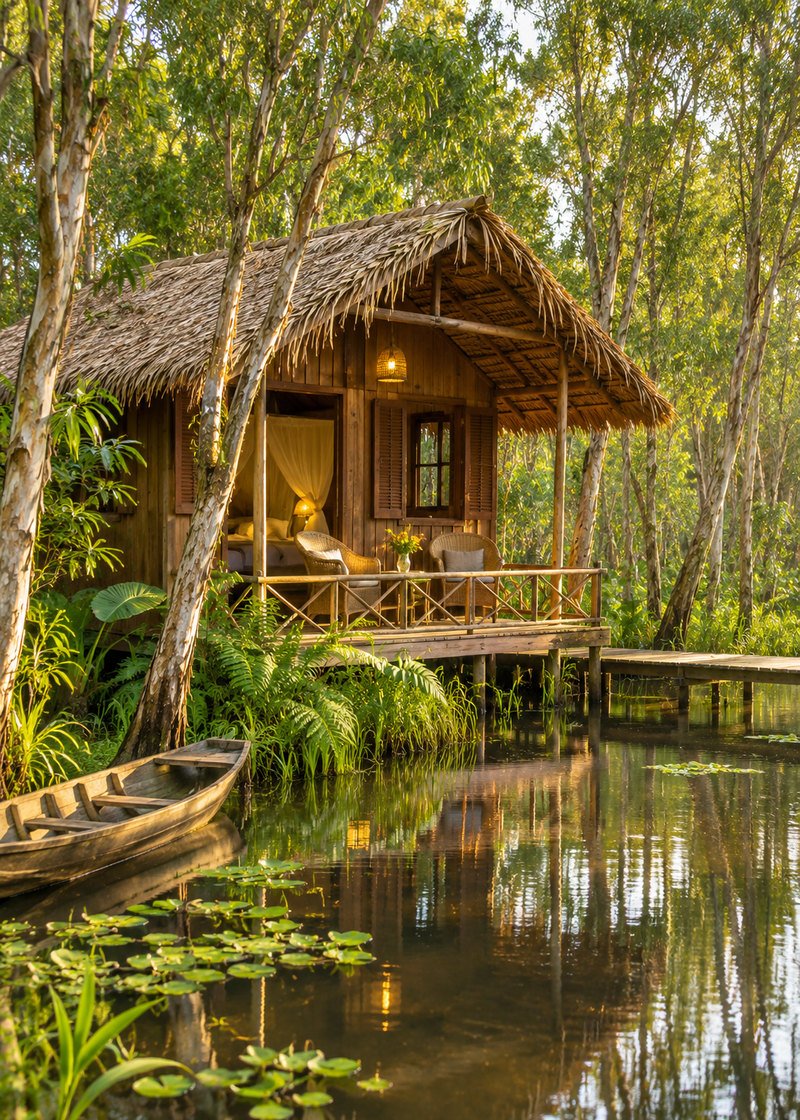
Near the forest: Some ecotourism operators advertise rustic rooms, homestay arrangements or glamping. A generic promotional cabin image does not prove that a specific property is available or bookable. Before paying, confirm bathrooms, cooling or ventilation, mosquito protection, meals, road access, mobile coverage and emergency transport.
Our default recommendation is to sleep in Ca Mau and take a prearranged forest trip. Only choose rural accommodation when the exact property and facilities are independently suitable for your party.
AI illustration · Concept only

AI illustration · Concept only

AI illustration · Concept only
What to eat in the U Minh region
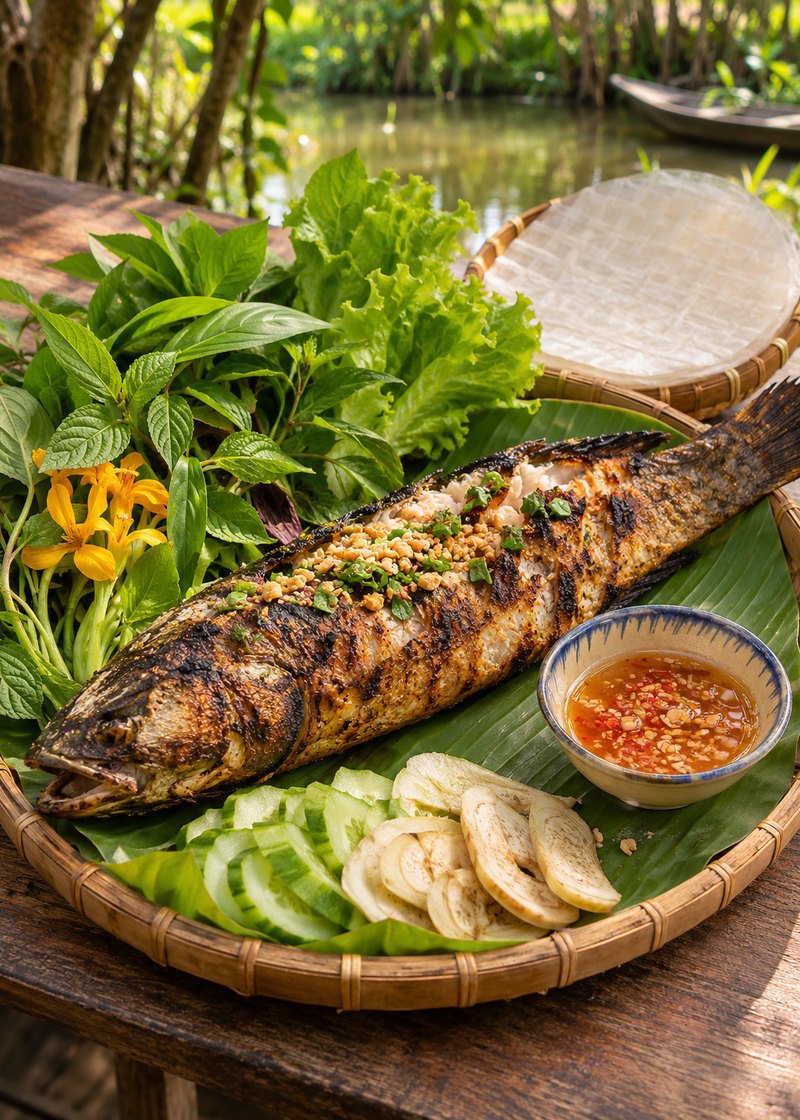
Ca loc nuong trui: Rustic grilled snakehead fish, often served with herbs, rice paper and dipping sauce. Lau mam: A savory fermented-fish hotpot with assorted southern vegetables and fish or meat. Lau luon: Eel hotpot featuring local flavors and fresh herbs. Melaleuca-region honey: A product closely associated with local bee-rafter traditions.
Menus depend on season and individual kitchens. Confirm the dishes before making a special journey, and ask about seafood allergies and ingredients. Not every jar labeled “forest honey” originates from within the national park.
One-day and two-day itineraries
One day, starting in Ca Mau
| Approx. time | Plan |
|---|---|
| 07:30 | Breakfast and depart Ca Mau |
| 08:30–09:00 | Reach confirmed park entrance or operator |
| 09:00–11:30 | Authorized guided nature experience, when available |
| 11:30–12:30 | Regional lunch |
| 12:30–14:00 | Optional cultural demonstration, prearranged |
| After 14:00 | Return to Ca Mau |
Times illustrate a sensible sequence, not verified booking slots.
Two days: forest and living culture
Day 1: Visit the national park subject to access, focusing on peatland ecology and managed observation. Stay in Ca Mau or at a fully verified rural property. Day 2: Arrange a honey-keeping cultural experience with a reputable local guide, followed by regional food. Travel onward when road conditions permit.
Three-day southern extension
Add a separate day for Ca Mau Cape, with its coastal mangrove landscape. It is not part of U Minh Ha National Park and should not be forced into a rushed forest afternoon.
The future of U Minh Ha tourism
Ca Mau approved a large ecotourism scheme in 2023, with a reported budget of about VND 1,458 billion. A further scheme to 2030 was approved under Decision 02191/QD-UBND in December 2025. On April 23, 2026, provincial Decision 1453/QD-UBND set out 1:2,000 zoning plans; the plan was publicly announced on May 15.
| Planning level | Area |
|---|---|
| Whole national park / overall study scope | 8,527.8 ha |
| Ecotourism development scope to 2030 | 1,318.5 ha |
| Da Bac component | 302.3 ha |
| Khanh An component | 1,016.2 ha |
| Area of the detailed zoning plan | 199.5 ha |
These figures come from an approved planning framework. They do not mean the facilities, trails or accommodation have been built or opened. Visitor needs must be balanced against forest rehabilitation and the park’s strict conservation purpose.
Safety and responsible travel
Fire: Peat can burn in dry periods. Follow access closures, never light fires in the forest and obey staff instructions. Falling trees: In 2026, park managers reported tree falls in degraded areas. Remain on designated paths and keep away from leaning or dead trees, especially in wind or rain.
Water: Canals may be deep, dark and obstructed. Use authorized boats, wear appropriately fitted life jackets and supervise children closely at jetties. Do not swim in forest canals. Health: Rural emergency access can be limited. Carry essential medication; visitors with serious sting allergies should carry prescribed emergency treatment. Wildlife and people: Observe without disturbance, photograph residents only with permission, and take rubbish away.
Frequently asked questions
Are U Minh Ha and U Minh Thuong the same?
No. They are separate parks in Ca Mau and An Giang respectively.
Can I always take a boat through the forest?
No. Routes, safety, water levels and permissions determine availability. Arrange an authorized activity beforehand.
How much should I budget?
There is no verified current official all-in price in this edition. Request a written group quote covering entry, guide, boat, transport and meals.
Is the park open year-round?
Not necessarily. Forest-fire prevention and conservation management can restrict or suspend access.
Can I visit U Minh Ha and Ca Mau Cape on one day?
Not recommended for most travelers. Plan two separate days.
Our decision
U Minh Ha is rewarding because its wetland ecology, living honey-gathering culture and conservation story are unlike Vietnam’s resort destinations. For a first visit, choose one confirmed forest experience and stay in Ca Mau. Use an established private operator when comfort is a higher priority, and a permitted park visit when conservation learning matters most.
Explore more on Wander Vietnam, compare southern itineraries in Mekong Delta: Where Should You Go and Stay? and read Best Time to Visit Vietnam.
Road and coach planning map
Sources and editorial transparency
Researched November 5, 2026. This guide is based on public documents, independently published reporting, research data and labeled operator claims. RoamDecide has not personally visited or inspected the park, hotels, boats or businesses described. Park admission, commercial availability and route travel times remain provisional. The Agoda hotel links in the Ca Mau accommodation section are affiliate links; RoamDecide may earn a commission at no extra cost to readers. Hotel bookings do not include national park access or forest activities.
- Ca Mau Province: Decision 1453/QD-UBND, 23 Apr 2026 (planning)
- VOV, 14 Jul 2026: preliminary forest deterioration and causes
- VietnamPlus, 26 Jun 2026: wetland culture and 2019 bee-rafter heritage
- Nhan Dan, 2023: approx. 26 km from central Ca Mau
- Dong Thap University Journal, 2024: forest structure and 2021 data
- Bao Ca Mau, 15 May 2026: ecotourism zoning announcement
- Bao An Giang, 27 May 2026: U Minh Thuong reopening
- Ministry of Public Security, 15 Oct 2026: planned Ca Mau Airport reopening
- Mia.vn: historical unofficial visitor and ticket descriptions