By RoamDecide Editorial Team · Last reviewed: 14 October 2026
Ho Chi Minh City, still widely called Saigon, is a year-round destination for street food, museums, markets and urban nightlife. Its temperatures stay warm throughout the year, but dry-season sunshine, peak heat, afternoon downpours and Tet holiday schedules make some months better for certain travelers than others. This guide weighs those trade-offs rather than treating every dry-season month as equally comfortable.
Quick Answer: When Is the Best Time to Visit Ho Chi Minh City?
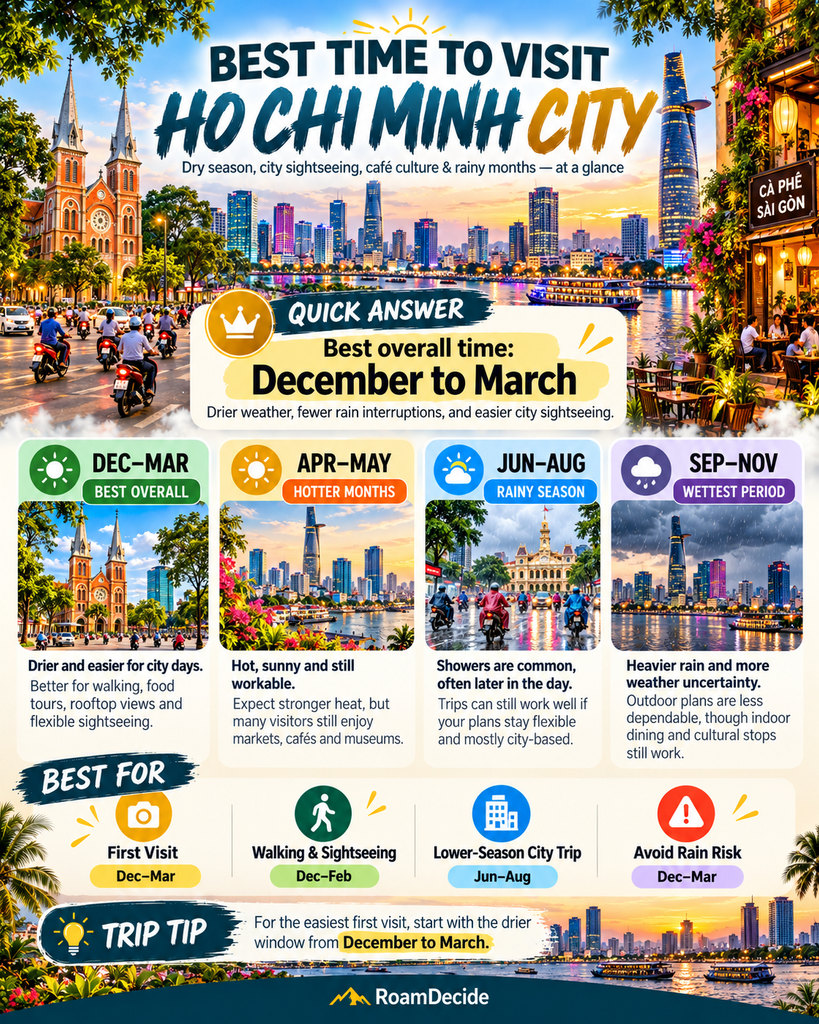
Best overall for a first visit: December–February. This is part of southern Vietnam’s drier season and supports easier city walks, food tours and flexible sightseeing. March–April is also relatively dry but can be significantly hotter. May–November brings higher rainfall; city-based trips still work if you plan around showers. For a national itinerary, compare our best time to visit Vietnam guide.
Tet 2027: Lunar New Year’s Day falls on 6 February 2027. Vietnam’s announced public-sector holiday runs 4–10 February; private businesses set their own operating schedules. Food stalls, markets, attractions, tours and transport services may operate differently, so verify before you book. Official holiday notice (10 October 2026).
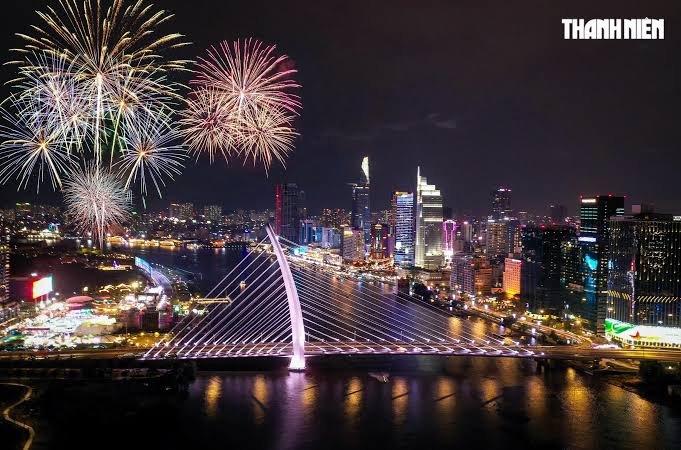
Ho Chi Minh City Weather by Month: Climate and Travel Planner
The following figures are secondary modelled reference averages (1991–2021) for the named Ho Chi Minh City location on Climate-Data.org, not directly extracted readings from the Tân Sơn Nhất meteorological station and not a 2027 forecast. Rainy-day estimates are deliberately omitted. Data source.
| Month | Avg low °C | Avg high °C | Rain mm | Humidity | Good for / watch out |
|---|---|---|---|---|---|
| January | 22.2 | 30.8 | 28 | 70% | Walks and city sights; still hot midday |
| February | 22.9 | 32.5 | 11 | 64% | Driest month; Tet 2027 changes schedules |
| March | 24.5 | 33.6 | 27 | 66% | Dry-season visits; rising heat |
| April | 25.6 | 33.8 | 74 | 71% | Museums and cafés; strongest reference heat |
| May | 25.5 | 32.3 | 204 | 80% | Flexible sightseeing; wet season begins |
| June | 24.9 | 30.9 | 248 | 85% | Food and indoor culture; downpours |
| July | 24.6 | 30.5 | 260 | 85% | Flexible plans; heavy showers |
| August | 24.4 | 30.5 | 279 | 85% | City activities; substantial rainfall |
| September | 24.2 | 30.4 | 308 | 86% | Wettest reference month; storm buffers |
| October | 23.9 | 30.1 | 262 | 86% | Markets and indoor activities; high tides possible |
| November | 23.5 | 30.1 | 142 | 83% | Transition travel; possible high tide disruption |
| December | 22.6 | 30.2 | 66 | 76% | First visits; drier weather, holiday atmosphere |
The reference dataset shows the lowest rainfall in February (11 mm), substantially higher totals from May (204 mm), and a September peak (308 mm). Average daytime highs rise above 33°C in March–April. These averages cannot predict the weather on a specific travel day or the risk of flooding on a specific street.
Decision Matrix: Choose the Right Month for Your Trip
| Choose | Best for | Trade-off |
|---|---|---|
| December–January | First visits, walking, food tours, day-to-day city sightseeing | Still hot at midday; popular dates can increase demand |
| February (outside Tet disruption) | Drier city travel and cultural activities | Tet 2027 changes opening hours and transport plans |
| March–April | Travelers prioritizing less rain who can manage heat | Hottest reference months; schedule outdoor breaks |
| May–August | Flexible city breaks, museums, cafés | More frequent downpours and humidity |
| September–October | Travelers comfortable with wet weather | Highest average rainfall period; localized flooding can disrupt travel |
| November | Transitional city travel | Rainfall declines but weather can remain variable |
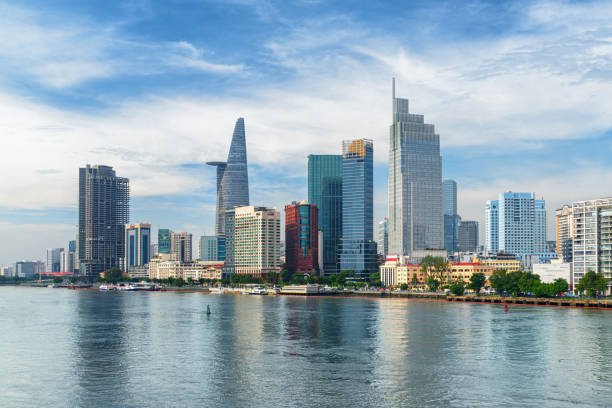
Before You Book: Four Factors Other Season Guides Can Miss
1. Dry Does Not Mean Cool
Ho Chi Minh City remains hot even in its drier months. March and April have reference average highs of 33.6°C and 33.8°C. For outdoor-heavy trips, prioritize early walks and late-afternoon activities instead of choosing solely by rainfall.
2. Rain Often Comes in Bursts, but It Can Still Disrupt Plans
Vietnam Tourism describes the May–November wet season as humid with frequent afternoon downpours. Rain does not necessarily last all day. Flooding can be more disruptive where heavy rain coincides with high tides, particularly in the late-year tide season. Low-lying streets may become temporarily difficult to pass. In October–December, check road access, allow transfer buffers and avoid scheduling airport transfers tightly after heavy evening rain. Conditions depend on rainfall, tides, drainage and location.
3. Tet 2027 Changes the City Experience
Tet is more than a disruption. Ho Chi Minh City has a longstanding Nguyen Hue Flower Street tradition; Government News documented the 2026 edition. Confirm the 2027 program and dates when announced. Central streets can be festive, while other neighborhoods may feel quieter. Demand for intercity transport rises before Tet and during the return rush; reserve early. During the February 4–10 public-sector holiday, independent eateries and tours may operate on different schedules. Confirm opening days directly.
4. City Weather and Coastal Weather Are Not the Same
Good conditions for shopping, food and museums in Saigon do not guarantee good sea conditions on Phu Quoc or perfect boat weather in the Mekong Delta. Check the destination-specific forecast and cancellation policy before committing to water-based activities.
Best Time to Visit Ho Chi Minh City by Season
December–February: Best Overall for Walking and First Visits
Historical reference rainfall is 66 mm in December, 28 mm in January and 11 mm in February. The lower rainfall helps make walks along Đồng Khởi, the Central Post Office area, Nguyễn Huệ pedestrian street and central food neighborhoods easier to plan. Ho Chi Minh City remains warm rather than cool. February 2027 requires an exception for Tet holiday disruptions.
Choose this period if: you want a flexible first visit with walking and street-food stops. Reconsider if: your trip overlaps Tet and you expect every family-run restaurant to operate normally.
March–April: Less Rain, More Heat
March–April still falls within the general dry-season pattern, but average reference highs of 33.6–33.8°C make full-day outdoor itineraries demanding. Aim for museum visits or shaded café breaks at midday and open-air sightseeing earlier or later.
May–August: Wetter, Still Worth Visiting
Reference monthly rainfall increases from 204 mm in May to 279 mm in August. The city remains active: markets, dining, cafés and indoor museums offer alternatives when storms interrupt street walks. Carry light rain protection, keep transit buffers and avoid stacking several weather-sensitive outdoor activities into one afternoon.
September–November: Wettest Stretch and Transition
September (308 mm) and October (262 mm) have the highest reference rainfall totals; November declines to 142 mm. Some days allow excellent sightseeing, but downpours and localized road disruption are meaningful uncertainties. November can be an attractive transition month for flexible travelers, though not a guaranteed dry-season experience.
Local Experiences: Match the Activity to the Weather
Walking, Markets and Street Food
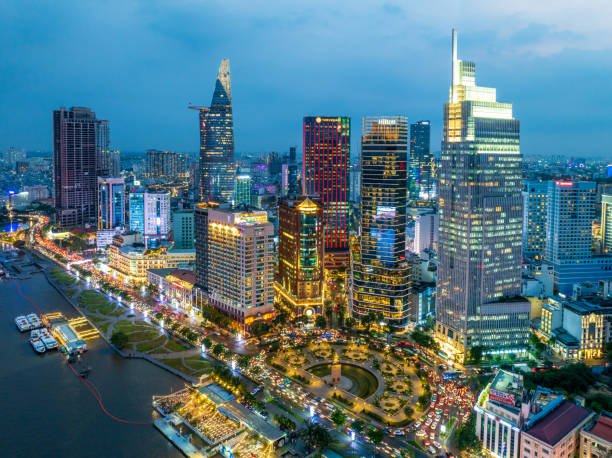
Central streets around Nguyễn Huệ, Đồng Khởi and Bến Thành are practical starting points for first-time sightseeing. In March–April, plan walks around heat and shade. In wet months, include covered food stops and transit buffers. For routes along its corridor, Metro Line 1 (Bến Thành–Suối Tiên) provides an alternative to congested roads, although last-mile access can still involve rain. Check current service hours.
Chợ Lớn and Cultural Neighborhoods
Chợ Lớn’s markets, heritage streets and temples reward a slower visit. In hot or rainy months, organize a shorter walking loop with indoor stops rather than crossing the city repeatedly. Cultural or festival opening arrangements should always be confirmed for the exact date.
Where to Stay by Season
In the rainy season, examine hotel access, transport options and flexible check-in. During Tet, verify opening arrangements for transfers and nearby eateries. For any season, evaluate traffic noise and time to your priority neighborhoods. See Where to Stay in Ho Chi Minh City for the full neighborhood decision guide.
Combining Ho Chi Minh City With Southern Vietnam
Ho Chi Minh City + Mekong Delta
The Mekong Delta shares the south’s broad wet/dry cycle, but individual river activities, water conditions and local destinations differ. December–April can be convenient for a city-and-delta itinerary; rainy-season trips remain possible with operator flexibility. Start with where to go and stay in the Mekong Delta and transport choices from Ho Chi Minh City.
Ho Chi Minh City + Phu Quoc
Phu Quoc is a beach destination with its own sea and storm considerations. December–April is a promising shared window, but don’t transfer a city weather forecast directly to the island. Read the Phu Quoc seasonal guide and compare where to stay in Phu Quoc before checking ferry/flight conditions and hotel cancellation terms.
Getting Around Vietnam
When you travel onward from Ho Chi Minh City, compare journey time, luggage needs and the reliability of the specific route. Our Vietnam transport decision guide provides the wider comparison.
Frequently Asked Questions
Is December or January better for a first visit?
January has the edge for a first visit focused on weather: its reference rainfall is 28 mm versus 66 mm in December, with similar average highs of around 30–31°C. Choose December for Christmas and New Year atmosphere downtown, but check accommodation prices and holiday demand.
Is Ho Chi Minh City too hot in April?
April has an average reference high of 33.8°C, but individual days may be hotter. It can still be enjoyable if you schedule outdoor activities outside peak daytime heat and allow indoor breaks.
Does it rain all day during the rainy season?
No. Afternoon downpours are common in the seasonal pattern described by Vietnam Tourism, but timing and intensity vary by day. Leave flexibility and be prepared for local travel delays.
Are restaurants closed during Tet 2027?
Some family-run establishments may close for part of the holiday, while others continue trading. Public-sector holidays run February 4–10, 2027; private opening hours are not uniform. Confirm specific venues directly.
Can I combine a September city break with the Mekong Delta?
Yes, with flexibility. September is the wettest month in this reference dataset for Ho Chi Minh City; check river activity arrangements, local weather and cancellation options.
What should I pack?
Bring breathable clothing and sun protection throughout the year. In May–November, add compact rain protection and footwear that can handle wet pavements. For a long outdoor day, plan hydration and shaded breaks.
Final Recommendation
Choose December–February for the easiest first visit focused on walking and food; account for Tet 2027 in February. Choose March–April if you can manage stronger heat. Choose May–November if you accept rainy-season trade-offs and prefer a flexible city itinerary. For Mekong Delta activities and Phu Quoc beaches, weigh the weather at the second destination separately.
Sources and Editorial Methodology
RoamDecide Editorial Team · Last reviewed: October 14, 2026. Next review: after Tet 2027. This is a desk-researched seasonal decision guide. It combines Vietnam Tourism’s regional season guidance, Climate-Data.org’s secondary 1991–2021 modelled reference averages for temperature/rainfall, and the October 10, 2026 government announcement of Tet 2027 dates. Weather averages are not forecasts. The data are not presented as direct Tan Son Nhat station normals. Experience-specific pricing, road flooding, business opening hours and transport conditions require checking at the time of booking.
References: Vietnam Tourism — Ho Chi Minh City; Vietnam Tourism — Weather and Climate; Climate-Data.org — Ho Chi Minh City; Government News — Tet 2027.
This guide does not claim firsthand testing of specific hotels, tours or transport providers. Affiliate relationships, if added in future, will be disclosed separately.